Cast Away Ending Explained: Why The Final Scene Still Hits Hard After 25 Years
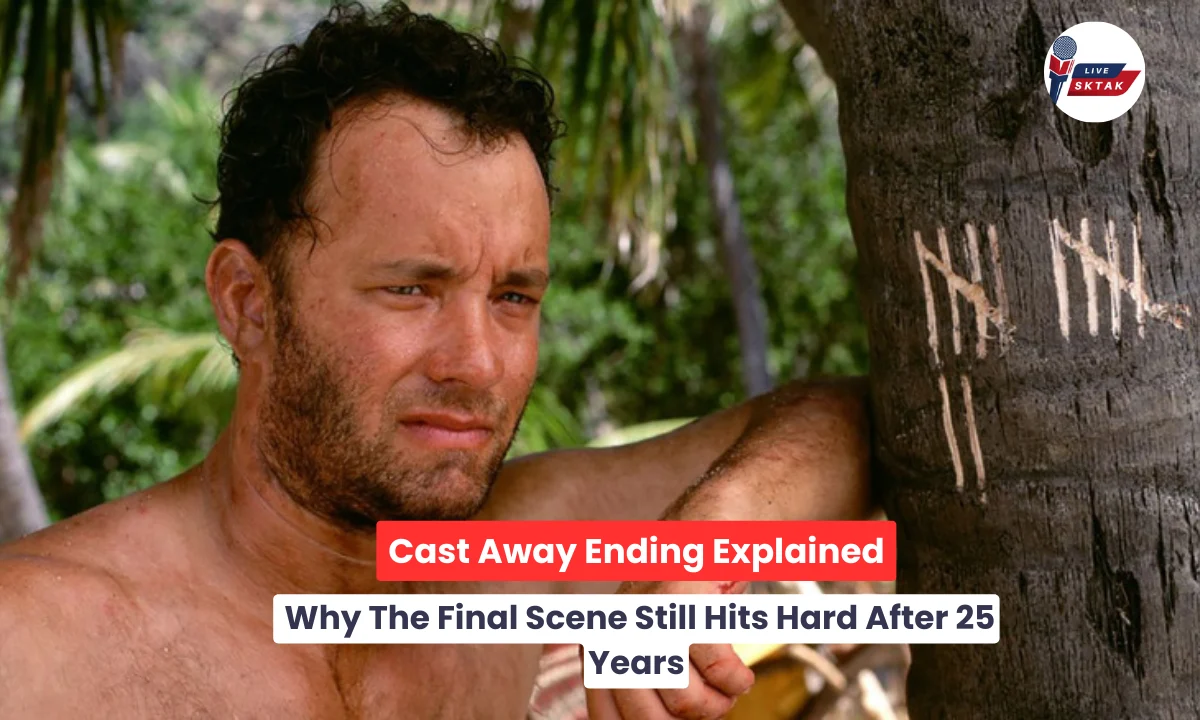
Cast Away Ending Explained: Why The Final Scene Still Hits Hard After 25 Years
The ending of Cast Away ending explained discussions never really slow down, even decades after the film’s release. Directed by Robert Zemeckis and led by a powerful performance from Tom Hanks, the movie avoids a neat or comforting resolution. Instead, it leaves viewers sitting with emotions like loss, acceptance, time, and uncertainty. That is exactly why people keep returning to the final moments.
At first glance, the film feels like a survival story. A man versus nature narrative. But the ending proves that survival was never the real point. The island was only the beginning. The real challenge starts after Chuck Noland comes home and realizes the world did not wait for him. The ending asks a quiet but uncomfortable question. What happens when you survive, but everything you survived for has changed?
Key Takeaways
- The ending focuses on emotional survival, not physical survival
- Time moving on is the film’s most painful truth
- Kelly’s choice represents realism, not betrayal
- The unopened package symbolizes hope and purpose
- The crossroads scene is about freedom and uncertainty
- Public reaction shows the ending still feels deeply personal
What The Ending Of Cast Away Is Really About
When Chuck is rescued after four years on the island, the story does not celebrate his return. There is no triumphant victory. Instead, the film slows down. It shifts focus to what Chuck has lost, not what he has survived.
Chuck returns believing Kelly was his anchor. She was the reason he stayed alive. What he finds is devastating. Kelly mourned him. She moved forward. She built a new life. This moment defines the ending. The film makes it clear that love can be real and still not survive time.
This is where many viewers feel the emotional weight hit hardest. Chuck was frozen in time on the island. The world kept moving. That contrast is the core idea behind the ending.
Why Chuck And Kelly Do Not End Up Together
The reunion between Chuck and Kelly is one of the most restrained scenes in the film. There is no argument. No villain. No dramatic confrontation. Just two people facing reality.
Kelly did not give up on Chuck quickly. She believed he might still be alive. But grief is heavy. Waiting forever is not realistic. The film treats her decision with respect. She did what many people would do. She chose to live.
This choice makes the ending painful but honest. If Kelly had returned to Chuck, the story would have turned into a fantasy. Instead, it stays grounded. Love alone is not always enough. Timing matters. Circumstances matter.
Chuck understands this. That is why he lets her go. Not because he stopped loving her. But because love also means accepting what cannot be changed.
The Meaning Behind Wilson’s Loss
Wilson is often remembered with humor. But within the story, Wilson represents survival of the mind. Chuck creates companionship to stay sane. Wilson listens. Wilson responds. Wilson becomes real because Chuck needs him to be.
When Wilson floats away, the moment feels cruel. Chuck screams. He breaks down. That reaction shows how deep the connection was. Wilson was not just a volleyball. He was stability. He was routine. He was control.
Losing Wilson prepares Chuck for what comes next. Back in civilization, he will lose Kelly too. The island trained him to endure loss. The ending reminds us that survival often comes with letting go.
The Angel Wings Package Explained
The unopened FedEx package with angel wings is one of the film’s strongest symbols. Chuck opens every package except this one. He treats it differently. It represents purpose beyond survival.
On the island, the package gives Chuck a reason to believe in the future. It becomes proof that his life still has direction. He does not know what is inside. That is important. Hope does not need details.
When Chuck finally delivers the package, no one answers the door. He leaves it anyway. This moment is quiet but powerful. The package did not save his life because of what was inside. It saved him because it gave him something to protect.
The Crossroads Scene And Its Meaning
The final scene places Chuck at a literal crossroads. Empty roads. Open land. No signs pointing to a clear future. A woman helps him with directions. Her truck carries the same angel wings symbol.
This scene is not about romance. It is about possibility. Chuck now has choices. For the first time since the plane crash, his life is not controlled by schedules, disasters, or survival instincts.
The wind moves across the land. Just like on the island, Chuck follows signs rather than plans. The film ends without telling us which road he takes. That is intentional. The ending belongs to the viewer.
What The Ending Says About Time
Time is the film’s quiet antagonist. At the start, Chuck controls time. He lives by clocks. Deadlines rule his life. On the island, time loses meaning. Days blend together.
When Chuck returns, time becomes painful. Four years is nothing to him emotionally. To everyone else, it changed everything. The stopped watch Kelly gave him symbolizes this truth. His time with her ended without warning.
The ending accepts this reality. Time does not pause for love. It does not pause for loss. It moves forward.
Public Opinion On The Ending From X
Recent conversations on X show that the ending still connects deeply with people. Many posts are emotional. Others use humor. Both reactions point to the same truth. The film stays with viewers.
Some people mention Wilson in lighthearted ways. Others talk about crying during the final scenes. Many connect Chuck’s isolation to personal experiences of loneliness. The film gives language to feelings people struggle to explain.
A recurring theme in posts is respect for the ending’s honesty. Viewers admire that the story does not force happiness. Instead, it reflects real life. Painful but meaningful.
Why The Ending Still Feels Relevant Today
More than twenty years later, the ending feels even more powerful. People live faster lives. Time feels shorter. Loss feels closer. The idea of returning to a life that no longer exists resonates deeply.
The ending also offers quiet optimism. Chuck is not broken. He is changed. He survived isolation. He survived grief. Now he gets to choose.
That balance between loss and hope is why the ending works. It does not promise happiness. It promises possibility.
Final Thoughts On Cast Away’s Ending
The ending of Cast Away is not meant to comfort. It is meant to reflect life as it is. Survival is not the finish line. Living with what comes after is the real journey.
Chuck stands at the crossroads alone. But he is free. And sometimes, freedom is the most honest ending a story can give.
Tags: Cast Away ending explained, Cast Away movie analysis, Tom Hanks Cast Away ending, Cast Away symbolism, Wilson Cast Away meaning, Cast Away final scene explained, survival movie ending
Related Posts :


Share This Post