Hyundai Verna Facelift Interiors Leaked: Dual Screens, Sporty Red Accents And A Cabin That Feels Almost New
Hyundai Verna Facelift Interiors
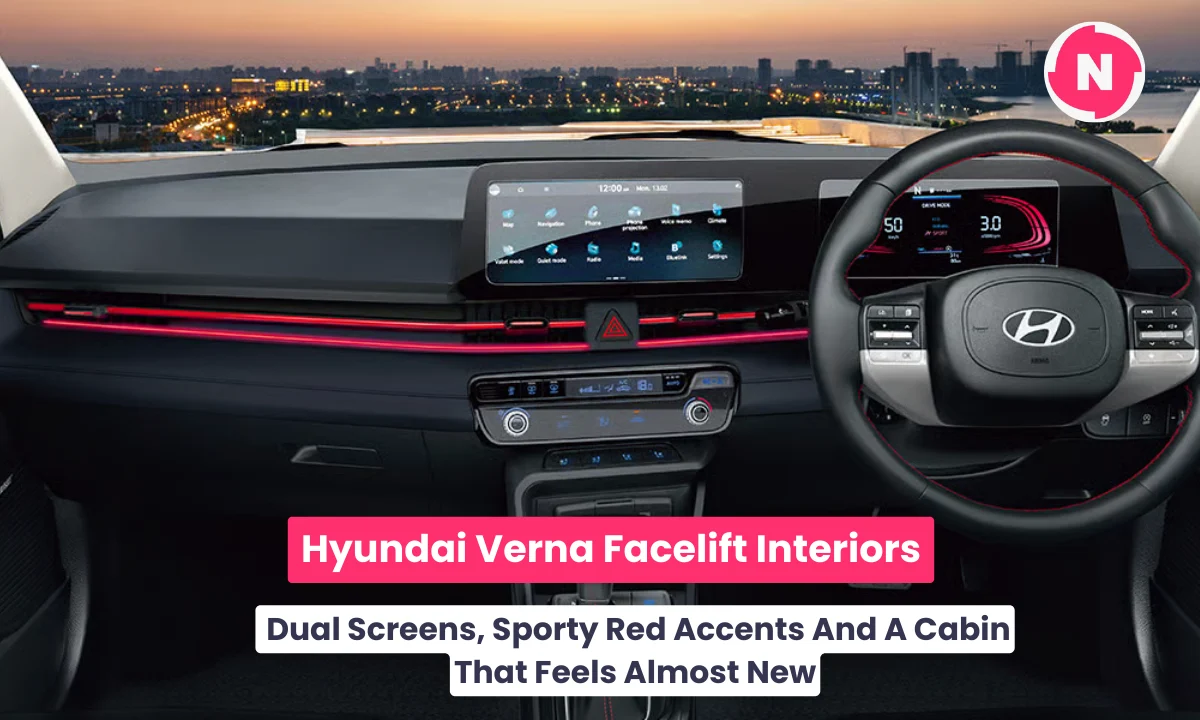
Hyundai Verna facelift interiors are trending after fresh February 2026 leaks revealed a dual screen dashboard, new flat bottom steering wheel and sporty red accents. The upcoming update of the Hyundai Verna is not just a minor refresh. From leaked spy shots to viral cabin videos, the focus is clearly on a more premium and tech driven interior experience.
This update also comes at a crucial time for Hyundai. Recent monthly sales data suggests that the Verna has been trailing behind key European rivals in the segment. In January 2026, the Verna reportedly sold under 1,000 units, while competitors like Volkswagen Virtus and Skoda Slavia hovered closer to the 2,000 unit mark each. That context matters. This facelift is not simply cosmetic. It represents Hyundai pushing back strongly in a segment where design, technology and perceived premium value directly influence buying decisions.
Sedan buyers in India have always expected comfort plus features. With strong rivals pushing hard on build quality and driving dynamics, Hyundai seems ready to respond with a cabin that feels sharper, smarter and more driver focused. The buzz on social platforms proves that the interior upgrades might be the real highlight of this facelift, and possibly the reason many buyers will reconsider the Verna in 2026.
Key Takeaways
- Curved dual 10.25 inch screens inspired by Hyundai Venue design language
- New flat bottom steering wheel with square hub and red stitching
- Turbo variants likely to get black and red sporty theme
- Premium touches like aluminium pedals and enhanced ambient lighting
- 1.5L turbo petrol engine with 7 speed DCT continues
- Facelift positioned as Hyundai’s strong response to falling sedan sales
Why This Facelift Matters More Than You Think?
The Hyundai Verna has always been known for offering strong value, especially in terms of interior features and technology. However, the current generation’s polarising exterior design and rising competition from Volkswagen Virtus, Skoda Slavia and Honda City have made the segment more competitive than ever.
When a car starts losing ground in monthly sales charts, manufacturers typically respond in two ways. They either introduce heavy discounts or they upgrade the product meaningfully. Hyundai appears to be doing both strategically. The facelifted Verna’s interiors suggest that the brand is addressing feedback around cabin freshness, material richness and overall modern appeal.
For many urban buyers in the ₹11 lakh to ₹18 lakh range, the interior experience matters more than outright performance numbers. It is where you spend your time daily. It defines the ownership experience. Hyundai understands this, and the facelift seems engineered to reclaim attention through cabin sophistication rather than mechanical reinvention.
Dual Digital Screens Bring A Modern Dashboard Layout
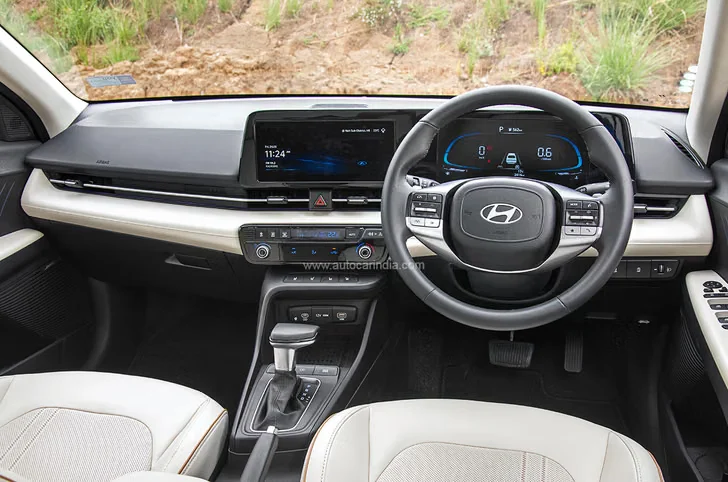
The biggest talking point of the Hyundai Verna facelift interiors is the connected dual screen setup. Leaked images suggest a curved or seamlessly integrated pair of 10.25 inch displays. One works as a fully digital instrument cluster. The other handles infotainment duties.
This layout appears inspired by Hyundai’s newer global design language and resembles the setup seen in the refreshed Hyundai Venue. That means Hyundai is aligning its sedan portfolio with its latest SUV interiors, creating consistency across models.
The benefit is not just visual appeal. A larger integrated display improves readability significantly. Navigation maps appear wider and clearer. Driving data such as fuel efficiency, ADAS alerts and trip information become easier to interpret. The infotainment system is expected to receive updated graphics and faster response times, improving daily usability.
In today’s market, screen size and interface smoothness are not minor details. Buyers actively compare these aspects with competitors like Volkswagen Virtus and Skoda Slavia, both of which use single 10 inch units rather than a curved dual display format. On pure visual drama and perceived technology, the Verna facelift could now take the lead.
Old Verna Vs Facelift Interiors: A Clear Step Forward
When you compare the current 2023 Verna interior with the leaked 2026 facelift cabin, the difference feels substantial rather than incremental.
The outgoing model already offered dual 10.25 inch screens, but they were positioned in a more horizontal and separated layout. The facelift seems to integrate them under a curved panel that feels more cohesive and premium.
The steering wheel design shift alone changes the cabin character completely. The earlier two spoke unit with conventional branding felt clean but understated. The new flat bottom D cut wheel with square hub and red stitching adds visible sportiness, especially in turbo trims.
Material perception also seems improved. While the current Verna never felt cheap, some critics mentioned certain hard plastic areas and a slightly dated layering approach. The facelifted dashboard appears more layered and sculpted, with better contrast stitching and richer visual depth.
In short, this is not a token refresh. It feels closer to a generational design evolution within the same platform.
New Steering Wheel Adds A Sporty Identity
Another highlight from the spy shots is the redesigned steering wheel. It now features a flat bottom design with a square central hub. The traditional Hyundai badge is replaced by the brand’s Morse code style dot logo, which is now seen across newer Hyundai products globally.
On the 1.5L turbo petrol variant, red stitching is clearly visible along the inner rim. The leather wrapped finish and thicker grip profile give it a more engaging feel. The flat bottom design enhances knee clearance and visually reinforces sportiness.
Enthusiasts online are calling this one of the most noticeable upgrades because the steering wheel is the most touched component in daily driving. A well designed steering wheel influences how premium and connected the car feels. Aluminium sport pedals visible in leaked images further amplify the performance oriented theme.
These subtle yet impactful changes help the Verna project a more driver focused personality without altering its mechanical foundation.
Dual Tone Theme And Premium Layered Dashboard
Leaks also suggest a black interior theme with red accents on higher turbo trims. This combination creates a bold contrast that appeals to younger buyers and driving enthusiasts. The red highlights appear on stitching, seat inserts and possibly dashboard trims.
The layered dashboard design adds depth and dimensionality. Instead of a flat horizontal spread, the facelifted cabin seems to adopt a more sculpted and enveloping layout. Soft touch materials are expected in key touch points such as upper dashboard surfaces and door pads.
Features that are likely to continue or improve include:
- Ventilated front seats
- Ambient lighting with possible multi color options
- Electric driver seat adjustments
- Automatic climate control with digital display
- Hyundai connected car technology with OTA updates
- 360 degree camera
- Electric sunroof
There is also speculation that Hyundai could introduce a panoramic style sunroof on top variants, although this remains unconfirmed. If implemented, it would significantly elevate the premium appeal within the segment.
Hyundai has built a strong reputation for offering feature loaded cabins. Even critics who earlier felt the Verna exterior design was polarising admit that interior quality remains one of its strongest attributes. The facelift appears to address any perception of stagnation by refreshing visual elements while retaining core comfort and convenience features.
How It Compares To Rivals’ Cabins?
The real test of any facelift lies in comparison. The mid size sedan segment includes Volkswagen Virtus, Skoda Slavia and Honda City. Each brings a distinct personality to the table.
Volkswagen Virtus focuses on a clean, driver centric layout with solid build quality and understated design. Skoda Slavia offers a classy, European inspired cabin with excellent rear seat space and a large boot. Honda City prioritises practicality, comfort and long term reliability with a conservative yet functional interior design.
Where the Verna facelift may gain an edge is in visual flair and technology presentation. The curved dual screen setup feels more futuristic than the single screen layouts of Virtus and Slavia. The sporty red accents in turbo variants add emotional appeal that rivals typically avoid.
Rear seat comfort has already been a Verna strength, and if Hyundai maintains this while upgrading dashboard design, the facelift could offer a balanced package of comfort, tech and excitement.
In practical buying terms, the facelifted Verna might attract customers who want something more visually exciting than the understated European twins, yet more feature rich than the conservative City.
What Else Hyundai Might Add
Looking at recent Hyundai updates in models like Venue and Creta, it is reasonable to expect some feature enhancements in the Verna facelift.
Wireless Android Auto and Apple CarPlay could finally become standard, eliminating the need for cables. Hyundai’s Bluelink connected car suite may receive improved app integration and over the air update capability. Ambient lighting could expand to multi color themes rather than a single shade.
Higher trims might also offer heated seats in addition to ventilation, especially if Hyundai wants to position the Verna as the most feature rich option in the segment. Advanced driver assistance systems are likely to continue, possibly with enhanced calibration and a cabin camera for driver monitoring.
If Hyundai introduces even half of these improvements, the Verna facelift will not just match rivals but potentially outpace them in perceived technology leadership.
Engine And Transmission Options Remain Familiar
Under the hood, the Verna facelift is expected to retain its existing petrol lineup. Here is a quick overview:
| Engine Option | Power Output | Torque | Transmission Options |
|---|---|---|---|
| 1.5L NA Petrol | 115 PS | 143 Nm | 6 Speed Manual, iVT |
| 1.5L Turbo Petrol | 158 PS | 253 Nm | 6 Speed Manual, 7 Speed DCT |
The turbo petrol engine paired with a 7 speed DCT remains the enthusiast choice. With 158 PS and 253 Nm, it already offers segment leading performance figures. Combined with the sportier interior theme, the turbo variant could become the most desirable trim for younger buyers.
By keeping the mechanical setup strong and refreshing the cabin significantly, Hyundai is balancing reliability with novelty. This approach reduces development costs while delivering visible improvement where it matters most to buyers.
Real Talk For Buyers: Should You Wait?
If you are considering a mid size sedan under ₹18 lakh, the Verna facelift deserves attention. If interior technology, sporty aesthetics and modern presentation matter to you, waiting for the facelift could be worthwhile.
However, if you need a car immediately, the current Verna may soon attract attractive discounts as dealers clear inventory. The existing model is still well equipped and mechanically strong. The difference lies mainly in visual freshness and design drama.
Turbo versus naturally aspirated variants also require careful thought. The turbo interior with red stitching and sport pedals will likely feel more exciting. The naturally aspirated trims may stick to a more neutral theme. The price gap of ₹2 to ₹3 lakh should be weighed against how much you value performance and interior sportiness.
Frequently Asked Questions
Will the facelift get bigger screens than 10.25 inches?
Current leaks suggest a dual 10.25 inch setup, but the curved integration makes it look larger. There is speculation about potential size increases, though nothing official has been confirmed.
Is the steering wheel the same as the new Hyundai Venue?
It appears closely related in design language, especially with the Morse code style logo and flat bottom shape.
When is the official launch expected?
Based on testing activity and leak frequency, an official reveal is likely within 2026, though exact dates remain unannounced.
What could be the expected price range?
The facelifted Verna is expected to remain within the ₹11 lakh to ₹18 lakh bracket, depending on variant and features.
Final Thoughts On Hyundai Verna Facelift Interiors
The leaked images from February 2026 show a cabin that feels sharper, more premium and more aligned with current buyer expectations. The dual screen dashboard gives it a futuristic edge. The new flat bottom steering wheel adds character and sportiness. Red accents on turbo trims strengthen the emotional appeal significantly.
More importantly, this facelift arrives at a strategic moment. With sales pressure from Volkswagen Virtus and Skoda Slavia, Hyundai needed a statement update. The interior transformation suggests that Hyundai is not merely refreshing the Verna. It is repositioning it as the most visually exciting and tech forward sedan in its class.
If priced competitively and supported by strong marketing, the facelifted Verna could once again become the default choice for buyers who want a feature rich, stylish and comfortable mid size sedan.
The excitement across social platforms confirms one thing clearly. The Hyundai Verna facelift interiors have already created anticipation before the official launch. And in today’s digital first automotive market, that kind of buzz often translates into showroom footfall and sales momentum.
Tags: Hyundai Verna facelift, Hyundai Verna interiors 2026, Verna dual screen dashboard, Verna turbo petrol 1.5L, Hyundai Verna steering wheel, Verna red interior accents, Hyundai sedan facelift India
Related Posts :



Share This Post