MG Majestor Vs Toyota Fortuner: Can India’s First D+ Segment SUV Shake The Segment In 2026?
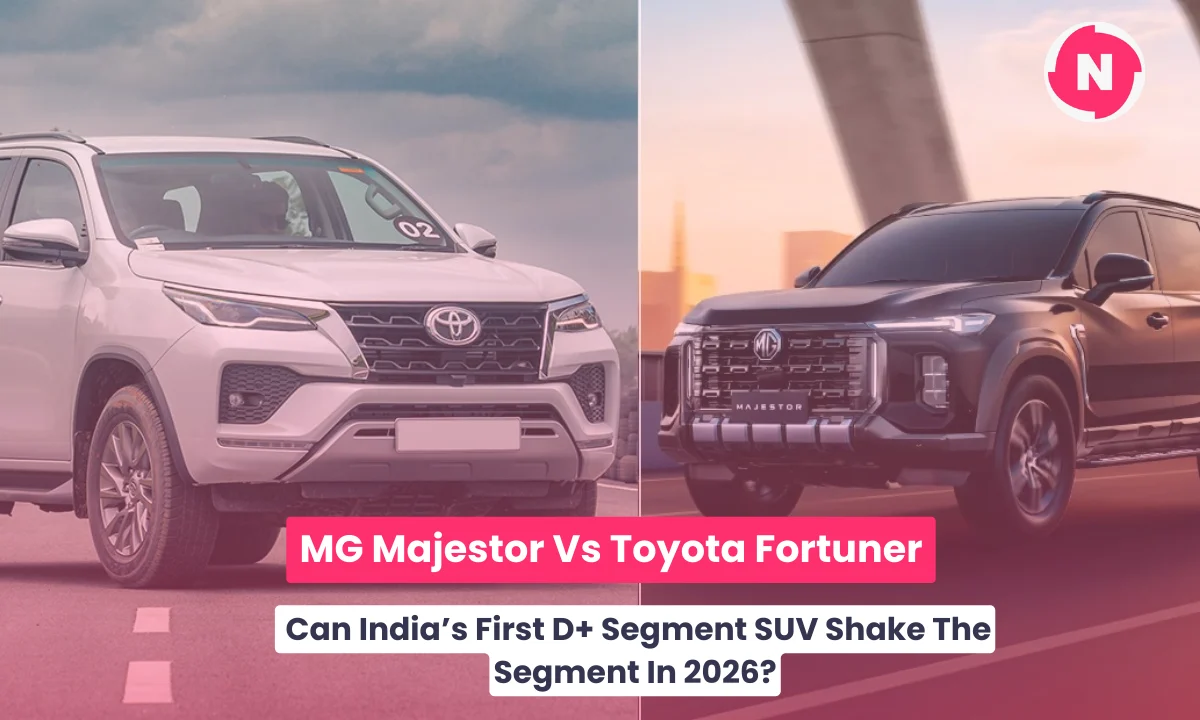
MG Majestor Vs Toyota Fortuner: Can India’s First D+ Segment SUV Shake The Segment In 2026? | Image Via Car Blog India
MG Majestor vs Toyota Fortuner is already one of the hottest debates in the Indian SUV market. Unveiled on February 12, 2026, the MG Majestor enters as India’s first D+ segment SUV. It promises bigger dimensions, triple differential locks, Level 2 ADAS, and a luxury focused cabin that aims to blend brute capability with executive comfort.
Positioned above the Gloster, this new flagship from MG Motor India targets the premium full size SUV buyer who wants both hardcore off road capability and high end comfort. The big question now is simple. Can it truly challenge the long standing dominance of the Toyota Fortuner in India’s highly brand conscious SUV market?
This detailed buyer focused guide goes beyond the press release highlights. We break down real world usability, variant recommendations, ownership considerations, off road hardware explanations, resale expectations, family practicality, and whether it is genuinely worth waiting for over the Fortuner or even the existing Gloster.
Key Takeaways
- MG Majestor unveiled on February 12, 2026
- Pre bookings open at Rs 41,000
- Expected price between Rs 40 to 50 lakh ex showroom
- 2.0L twin turbo diesel with 215 hp and 478 Nm
- 8 speed automatic gearbox
- Triple differential locks with low range transfer case
- 10 terrain modes with M Crawl system
- 810 mm water wading capacity
- Larger than Toyota Fortuner in every dimension
- Dual 12.3 inch screens and 12 speaker JBL audio system
- Level 2 ADAS available on higher variants
- Available in 6 and 7 seater configurations
- Deliveries expected from May 2026
MG Majestor Positioning And Launch Details
The MG Majestor was officially unveiled on February 12, 2026. Pre bookings are currently open at Rs 41,000. Official prices are expected to be announced in April 2026, with deliveries likely to begin from May 2026 across major cities.
MG calls it India’s first D+ segment SUV, positioning it above the MG Gloster. This is a strategic move. The brand wants to attract buyers who were previously considering the Toyota Fortuner, Jeep Meridian, and Skoda Kodiaq but were looking for more size, more technology, and stronger off road credentials.
Expected pricing is between Rs 40 lakh to Rs 50 lakh ex showroom. If MG prices the Sharp 4×2 aggressively near the lower end of that range, it could seriously disrupt the premium ladder dominated by Toyota.
The Majestor is not just a cosmetic update of the Gloster. It carries significant mechanical and equipment upgrades, making it a separate identity within MG’s SUV lineup.
Exterior Design And Road Presence
The MG Majestor focuses heavily on road presence. It adopts a bold front fascia with a large Mosaic Matrix grille, sharp Dragon Eye LED DRLs, muscular bonnet lines, and a wide stance that makes it look substantially larger than the Fortuner.
Key exterior highlights include:
- Massive upright grille design
- Full LED headlamps and connected LED tail lamps
- 19 inch dual tone alloy wheels
- Strong shoulder lines and squared wheel arches
- High ground clearance stance
Color options include Pearl White, Concrete Grey, Metal Black, and Metal Ash. The darker shades enhance its aggressive SUV identity, while Pearl White gives it a premium executive appearance.
Compared to the Fortuner’s more conservative and familiar design language, the Majestor looks more modern and imposing. Buyers who want to stand out may prefer MG’s approach.
Dimensions Comparison With Toyota Fortuner
On paper, size is one of Majestor’s biggest advantages.
| Specification | MG Majestor | Toyota Fortuner |
|---|---|---|
| Length | 5046 mm | 4795 mm |
| Width | 2016 mm | 1855 mm |
| Height | 1876 mm | 1835 mm |
| Wheelbase | 2950 mm | 2745 mm |
The Majestor is longer, wider, and taller than the Fortuner. It also offers a significantly longer wheelbase. This directly impacts cabin space, especially for second and third row passengers.
A longer wheelbase usually translates into better legroom and improved ride stability at highway speeds. For families who frequently travel long distances, this matters more than just raw power figures.
In terms of sheer presence, the Majestor looks and measures like a segment above.
Engine, Performance And Real World Driving Expectations
Under the hood, the MG Majestor uses a 2.0 litre twin turbo diesel engine producing 215 hp and 478 Nm of torque. It is paired with an 8 speed automatic gearbox.
Available configurations:
- 4×2
- 4×4 with low range transfer case
The twin turbo setup ensures better low end torque delivery as well as stronger mid range pull. With 478 Nm available, overtaking on highways should feel effortless even with a full cabin.
In comparison, the Toyota Fortuner’s 2.8 litre diesel engine is known for its robust performance and durability. While the Fortuner has a larger engine, the Majestor actually produces competitive torque figures.
In daily city driving, the Majestor is expected to feel large but manageable thanks to its 360 degree camera and multiple parking sensors. Highway cruising should be stable due to its long wheelbase and body on frame construction.
Expected fuel efficiency could range between 10 to 12 kmpl in mixed driving conditions, similar to the Gloster. Buyers should not expect dramatic efficiency from a heavy full size SUV.
In Depth Off Road Capabilities Explained
This is where the Majestor tries to separate itself from competitors.
The headline feature is the triple differential lock system. It includes:
- Front differential lock
- Centre differential lock
- Rear differential lock
Most SUVs in this price bracket offer only a rear differential lock or limited traction systems. Having all three allows torque to be distributed evenly to all wheels in extreme conditions.
It also comes with:
- Low range transfer case
- 10 terrain modes
- M Crawl low speed control
- Hill descent control
- 810 mm water wading capacity
How does this work in real scenarios?
In rocky terrain, locking the differentials ensures that even if one or two wheels lose traction, power is still delivered to wheels with grip. In deep mud or sand, low range gearing provides controlled torque without excessive throttle input. M Crawl helps maintain a steady low speed over obstacles without constant pedal input.
The Fortuner offers selectable drive modes and traction systems, but it does not provide triple differential locks. On paper, the Majestor appears more hardcore.
However, long term durability of these systems in Indian conditions remains to be proven. Toyota’s mechanical reliability track record is still unmatched.
Interior Experience And Family Practicality
Inside, the Majestor adopts an all black premium theme with soft touch materials and ambient lighting.
Top highlights include:
- Dual 12.3 inch screens
- 12 speaker JBL audio system
- Ventilated and heated front seats
- Multi mode massage seats
- Panoramic sunroof
- 64 colour ambient lighting
- 360 degree camera
- Six airbags as standard
- Level 2 ADAS
The second row can be configured as captain seats in the 6 seater layout. This makes it appealing for families who prioritize comfort over maximum seating.
Third row space is expected to be better than the Fortuner due to the longer wheelbase. Adult usability for short journeys seems practical, though it may not match MPV level comfort.
Boot space with third row folded should be generous enough for long road trips.
For urban family buyers who want luxury features without stepping into luxury brand territory, the Majestor offers strong appeal.
Detailed Variant Breakdown And Recommendation Guide
The MG Majestor will be offered in:
- Sharp 4×2
- Savvy 4×2
- Savvy 4×4
Sharp 4×2
Best suited for buyers who want the Majestor’s size and premium cabin without spending on 4×4 hardware. It includes dual screens, 360 degree camera, powered seats, three zone climate control, leatherette upholstery, and core safety features.
Ideal for city use and highway touring.
Savvy 4×2
Adds panoramic sunroof, ventilated and massage seats, JBL 12 speaker system, Level 2 ADAS, memory seats, and optional captain seat layout.
Perfect for families focused on comfort and technology rather than off road exploration.
Savvy 4×4
The flagship. Gets triple differential locks, low range transfer case, M Crawl, and all terrain modes along with full luxury features.
Recommended for buyers who genuinely plan to explore rough terrain or simply want the most capable version available.
Expanded MG Majestor Vs Toyota Fortuner Comparison
| Feature | MG Majestor | Toyota Fortuner |
|---|---|---|
| Engine | 2.0L Twin Turbo Diesel | 2.8L Diesel |
| Power | 215 hp | Lower than Majestor |
| Torque | 478 Nm | Comparable range |
| Gearbox | 8 speed AT | 6 speed AT |
| Diff Locks | Triple | Single rear in select variants |
| ADAS | Level 2 | Limited |
| Screen Setup | Dual 12.3 inch | Smaller infotainment |
| Wading Depth | 810 mm | Lower |
| Expected Price | 40 to 50 lakh | Similar bracket |
| Resale | Yet to be proven | Extremely strong |
Majestor clearly wins on features, size, and hardware. Fortuner wins on brand trust, resale value, and long term reliability perception.
Ownership, Service Network And Resale Concerns
Public sentiment on X shows excitement but also hesitation.
Pros highlighted by users:
- Bigger than Fortuner
- More features per rupee
- Strong off road hardware
- Premium interior experience
Concerns include:
- MG service network consistency
- Long term reliability track record
- Lower resale value compared to Toyota
- Brand perception debates
Toyota enjoys legendary resale strength in India. Fortuner owners often recover a large portion of their investment after years of ownership.
MG will need to support Majestor buyers with strong warranty packages, transparent service costs, and reliable parts availability to build confidence.
Frequently Asked Questions
MG Majestor vs Toyota Fortuner which is better?
If you want maximum features, bigger size, and advanced off road hardware, the Majestor looks better on paper. If you prioritize proven reliability and resale value, Fortuner still leads.
Is MG Majestor worth buying over Gloster?
Yes, if you want updated design, triple differential locks, improved cabin theme, and more premium positioning.
What is D+ segment?
D+ segment refers to full size body on frame SUVs positioned above standard D segment models, offering larger dimensions and premium positioning.
Expected mileage?
Around 10 to 12 kmpl in mixed conditions.
Best variant for off roading?
Savvy 4×4 with triple differential locks.
Should you book now or wait?
If MG offers early booking benefits and introductory pricing, booking early could be beneficial. However, cautious buyers may prefer to wait for real world reviews and test drives after launch.
Timeline And Next Steps For Buyers
- Pre booking amount: Rs 41,000
- Price announcement: April 2026
- Deliveries: Expected May 2026
Early buyers may receive priority allocation and possible extended warranty packages.
If you are not in a hurry, waiting for official pricing and initial ownership reviews would be a sensible approach.
Final Thoughts
The MG Majestor enters the market with bold intentions. It combines serious 4×4 hardware, luxury focused interiors, and modern technology into one large imposing SUV.
On paper, it looks stronger than the Fortuner in multiple measurable areas. However, India’s SUV market values trust, resale, and reliability as much as features.
If MG manages competitive pricing, consistent service support, and positive ownership feedback in the first year, the Majestor can genuinely disturb the established hierarchy.
Until prices are revealed in April 2026, the MG Majestor vs Toyota Fortuner battle will continue to dominate search trends and automotive discussions across India.
Tags: MG Majestor, MG Majestor vs Toyota Fortuner, MG Majestor price in India, MG Majestor launch date, MG Majestor 4×4 features, MG Majestor interior, MG Majestor off road capabilities, D+ segment SUV India
Related Posts :


Share This Post