Toyota Ebella Price In India: 543 Km Range EV That Could Shake The Segment
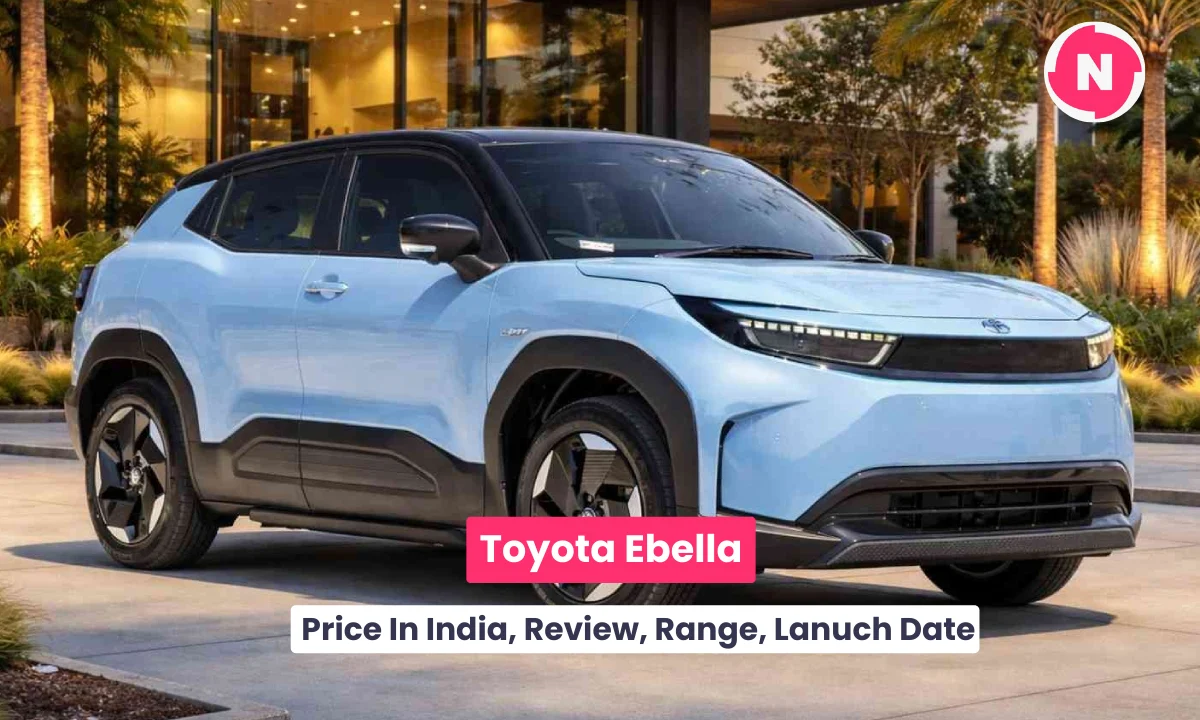
Toyota Ebella: Price In India, Review, Range, Lanuch Date
Toyota Ebella price in India is currently one of the most searched automotive queries across Google, YouTube, and auto forums. The reason is not hype alone. This is Toyota’s first serious mass market electric SUV for India, and it enters the most competitive EV segment under ₹25 lakh. Buyers are waiting anxiously because pricing will decide whether this becomes a segment disruptor or just another safe electric option.
Unveiled on 20 January 2026, the Toyota Urban Cruiser Ebella marks Toyota Kirloskar Motor’s formal entry into India’s mid size battery electric SUV space. With bookings open at ₹25,000 and deliveries expected shortly after the official price announcement, anticipation is extremely high. However, prices are still not officially revealed as of 14 February 2026, and that uncertainty is shaping buyer sentiment.
This article goes beyond first drive impressions. It covers expected pricing, Battery as a Service calculations, real world range analysis, charging cost breakdown, ownership benefits, rival comparisons, public sentiment, and practical buying advice. If you are seriously considering an electric SUV in 2026, this is the detailed buyer guide you need.
Key Takeaways
- Toyota Ebella unveiled in India on 20 January 2026
- Bookings open with ₹25,000 refundable token
- Expected price range ₹17 lakh to ₹23 lakh ex showroom
- Two battery options 49 kWh and 61 kWh
- Claimed range up to 543 km ARAI
- Real world range expected 350 to 400 km
- Front wheel drive with up to 174 bhp
- Level 2 ADAS in top variant
- 8 year or 2 lakh km battery warranty
- Battery as a Service option expected to reduce upfront cost
Launch Date And Booking Details
The Toyota Urban Cruiser Ebella was officially unveiled in India on 20 January 2026. Bookings began immediately with a token amount of ₹25,000. The company has indicated that deliveries will commence soon after the final pricing announcement, which industry sources suggest may happen between 16 and 19 February 2026.
The Ebella is built on a co developed EV platform shared with the Maruti Suzuki eVitara, but Toyota has introduced design changes, suspension tuning differences, and its own feature calibration to position it slightly more premium. The brand is clearly targeting reliability focused family buyers who value Toyota’s service network and resale confidence.
Toyota Ebella Price In India Expected (Live Estimates)
As of now, official ex showroom prices are not declared. However, industry projections based on dealership inputs and media leaks suggest the following structure:
| Variant | Battery Pack | ARAI Range | Expected Ex Showroom | On Road Delhi Estimate |
|---|---|---|---|---|
| E1 | 49 kWh | 440 km | ₹17 to ₹18 lakh | ₹19 to ₹20 lakh |
| E2 | 61 kWh | 543 km | ₹19.5 to ₹21 lakh | ₹21 to ₹23 lakh |
| E3 | 61 kWh with ADAS | 543 km | ₹21 to ₹23 lakh | ₹23 to ₹25 lakh |
These are expected numbers and subject to final confirmation.
Why Pricing Is Critical
The segment already includes strong competitors like:
- Hyundai Creta Electric
- Tata Curvv EV
- Mahindra BE 6
- MG Windsor EV
If Toyota prices the E2 variant under ₹20 lakh ex showroom, it could instantly become one of the strongest value propositions in the segment. However, if the top variant approaches ₹24 to ₹25 lakh on road, buyers may start cross shopping aggressively.
Battery As A Service (BaaS) Explained
Toyota is expected to offer a Battery as a Service model, similar to what some rivals provide. This allows buyers to purchase the vehicle at a lower upfront price while leasing the battery separately.
Estimated BaaS Math
- Upfront vehicle price could drop by ₹2 to ₹3 lakh
- Monthly battery subscription estimated ₹3,000 to ₹5,000 depending on usage
- 60 percent assured buyback after 3 years under certain schemes
For example, if the E2 variant costs ₹20 lakh ex showroom with battery, the BaaS model could bring the initial price closer to ₹17 lakh. Over three years, subscription payments may total around ₹1.2 to ₹1.5 lakh, depending on usage slabs.
For buyers worried about battery degradation and resale value, this model reduces long term risk significantly.
Battery Options And Real World Range
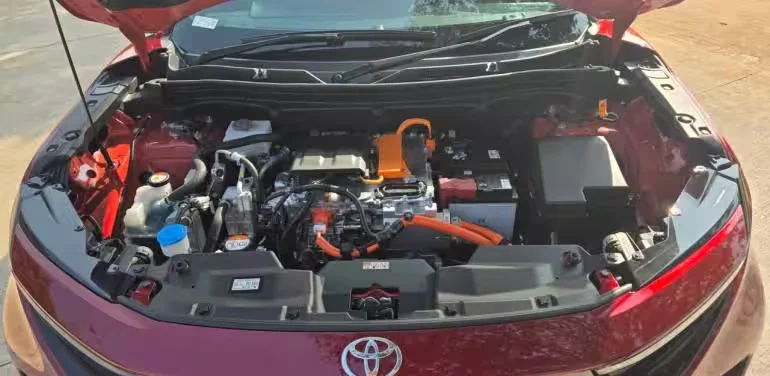
The Ebella uses lithium iron phosphate battery chemistry, known for better thermal stability and longer lifecycle durability.
49 kWh Battery
- Power output approximately 142 to 144 bhp
- Torque 193 Nm
- ARAI certified range 440 km
61 kWh Battery
- Power output approximately 171 to 174 bhp
- Torque 193 Nm
- ARAI certified range 543 km
Real World Range Expectation
Based on early drive impressions and efficiency figures around 6 km per kWh:
- 49 kWh battery practical range 300 to 330 km
- 61 kWh battery practical range 350 to 400 km
- Careful city driving may stretch close to 430 km
In mixed city and highway usage with air conditioning on, 370 to 390 km is a realistic expectation for the larger battery.
Charging Time And Running Cost
Charging Speeds
- DC fast charging up to 67 to 70 kW
- 10 to 80 percent in approximately 45 minutes
- 7.2 kW AC home charger full charge in 8 to 10 hours
- Standard 3.3 kW charger may take 15 hours for full charge
Running Cost Per Kilometre
Assuming electricity cost of ₹7 per unit:
- 61 kWh full charge cost approximately ₹427
- Practical 380 km range
- Cost per km around ₹1.1 to ₹1.5
Even factoring inefficiencies and higher tariffs, real world running cost should stay between ₹1.8 to ₹2.2 per km.
Compare this with a petrol SUV averaging ₹8 to ₹10 per km fuel cost. Over 15,000 km annually, savings can exceed ₹90,000 per year.
Design And Road Presence
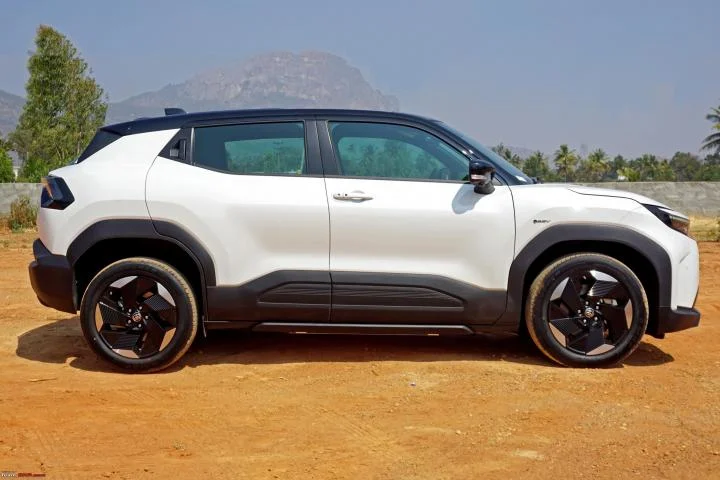
The Ebella features Toyota’s hammerhead inspired front styling with slim LED headlamps and a closed grille. While it shares its silhouette with the eVitara, subtle detailing and Toyota badging give it a slightly more premium identity.
Dimensions:
- Length approximately 4285 mm
- Wheelbase 2700 mm
- Ground clearance 184 mm
The design philosophy is conservative and mature. It avoids excessive futuristic elements and instead aims for long term appeal.
Interior Features And Cabin Experience
The cabin prioritizes usability and comfort rather than flashy gimmicks.
Key highlights include:
- 10.1 inch touchscreen infotainment system
- 10.25 inch digital instrument cluster
- Wireless Android Auto and Apple CarPlay
- JBL premium sound system
- Ventilated front seats
- Powered driver seat
- Fixed panoramic style glass roof
- 360 degree camera
- Level 2 ADAS in E3 variant
Material quality feels solid and well assembled. Toyota’s reputation for durability is visible in switchgear quality and panel fit.
However, there are compromises:
- Rear seating posture slightly knees up due to battery floor
- Boot space 306 litres which is below some rivals
- No single pedal driving mode
Ultimate Rival Comparison Table
| Feature | Ebella | Creta Electric | Curvv EV | BE 6 | Windsor EV |
|---|---|---|---|---|---|
| Max Range | 543 km | Approx 500 km | Approx 550 km | Approx 450 km | Approx 460 km |
| Real Range | 350 to 400 km | 330 to 380 km | 380 to 420 km | 320 to 360 km | 330 to 370 km |
| Boot Space | 306 L | Higher | Moderate | Good | Moderate |
| ADAS | Yes top variant | Yes | Yes | Yes | Limited |
| Warranty | 8 years battery | 8 years | 8 years | 8 years | 8 years |
| Service Network | Very strong | Strong | Strong | Growing | Moderate |
Verdict Summary
Ebella wins on brand trust, refinement, and service network strength. It loses some points on boot space and excitement factor compared to sportier rivals.
Ownership Deep Dive
Toyota offers:
- 8 year or 2 lakh km battery warranty
- Over 500 BEV ready service touchpoints
- Assured buyback schemes
- Roadside assistance packages
5 Year Ownership Estimate
Assuming 15,000 km per year:
- Fuel savings over petrol SUV approx ₹4.5 lakh
- Lower maintenance due to fewer moving parts
- Strong resale due to Toyota brand
This makes total cost of ownership highly competitive.
Real Public Sentiment (February 2026)
Across X and automotive forums, common themes include:
- “Smooth drive but price must stay under ₹20 lakh”
- “Toyota service network gives peace of mind”
- “Boot space is small for long family trips”
- “Is it worth paying extra over eVitara?”
Overall perception is positive but cautious. Buyers are clearly waiting for official pricing before committing.
FAQs Buyers Are Searching
Is Ebella better than eVitara?
Mechanically similar, but Toyota may offer better service perception and resale strength.
Will it get subsidies?
State level EV benefits may apply depending on location. Central incentives vary by policy period.
Real range in Delhi summer?
Expect 10 to 15 percent drop compared to mild weather conditions.
Delivery timeline?
Initial deliveries expected within weeks of official price announcement.
Final Verdict With Buyer Personas
Best For
- First time EV buyers
- Reliability focused families
- Buyers prioritizing resale value
- City commuters with occasional highway trips
Skip If
- You want maximum boot capacity
- You prefer aggressive sporty styling
- You want the absolute lowest entry price
The Toyota Ebella has the potential to become a sensible, dependable electric SUV for Indian families. Its success depends almost entirely on final pricing strategy. If Toyota delivers aggressive pricing, especially for the E2 variant, this could become one of 2026’s most practical EV purchases.
For now, the segment waits. Pricing will decide everything.
Tags: Toyota Ebella price in India, Toyota Urban Cruiser Ebella review, Toyota Ebella range, Toyota Ebella launch date, Toyota electric SUV India, 61 kWh battery EV, Toyota Ebella ADAS features
Related Posts :


Share This Post