Ending Explained Ed Gein Netflix: Why The Finale Focuses On Legacy Over Closure
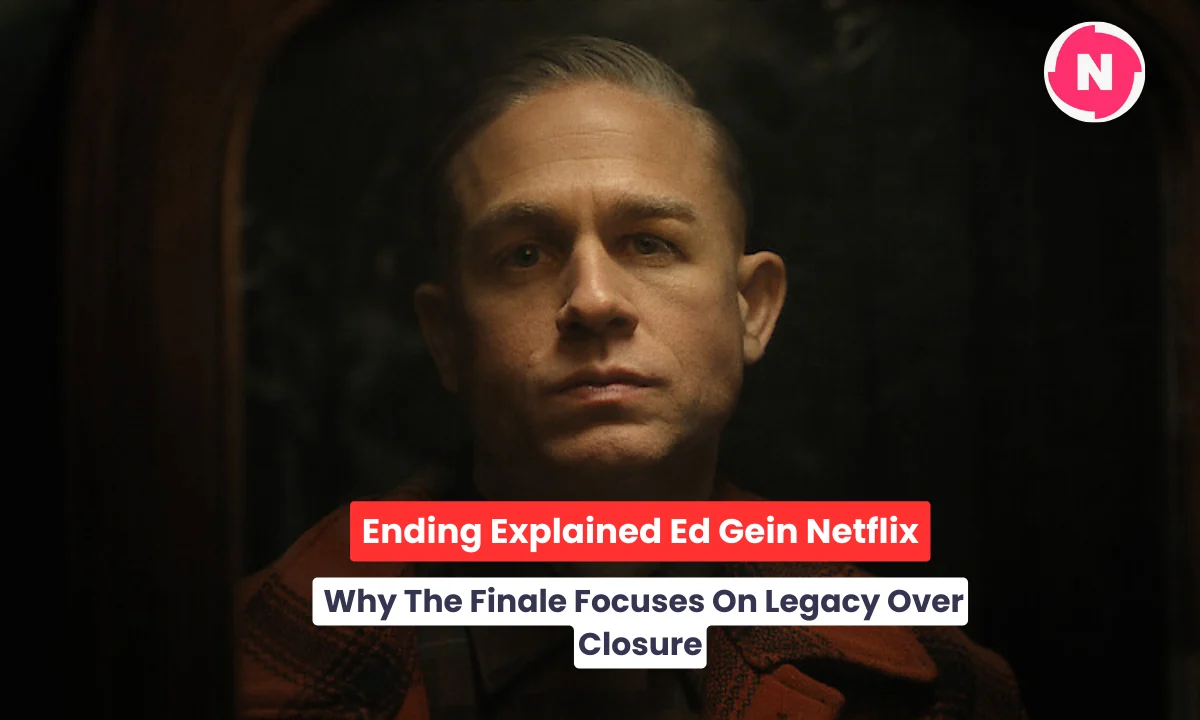
The ending explained Ed Gein Netflix discussion has become one of the most searched topics since Monster: The Ed Gein Story dropped.
Viewers expected a brutal final chapter that neatly closes Ed Gein’s crimes. Instead, the series ends on a quiet, surreal note that shifts attention away from violence and toward legacy, myth, and obsession. In the final episode, Netflix moves away from shock value and asks a harder question. What happens when a real criminal turns into a cultural symbol.
The finale does not try to redeem Ed Gein. It also does not punish him in the traditional sense. Instead, it shows how his story escapes him and becomes something society keeps reshaping. That choice explains why so many viewers finished the series confused, unsettled, or divided.
Key Takeaways
- Ed Gein’s death is shown as calm and surreal rather than violent
- The finale blends reality with delusion to reflect his mental state
- The story shifts focus from crimes to cultural legacy
- Horror icons inspired by Gein are used to show lasting impact
- Public reaction remains split between praise and discomfort
Why The Ending Feels So Different From The Rest Of The Series
For most of the season, Monster: The Ed Gein Story stays grounded in disturbing detail. The finale changes tone completely. Ed Gein is no longer shown as an active threat. He is old, sick, and confined to a psychiatric facility. This shift is deliberate.
Netflix uses this change to signal that the story is no longer about what Ed did. It is about what the world did with his story. The slow pace, dreamlike scenes, and absence of explicit violence reflect how Ed’s mind has fractured over time.
Instead of escalating horror, the ending pulls back and forces viewers to sit with discomfort. That discomfort comes from realizing the damage continues even after the killer is gone.
What Actually Happens To Ed Gein At The End
In the final episode, Ed Gein is diagnosed with advanced lung cancer. His health declines quietly. He coughs blood, grows weaker, and eventually dies in his hospital bed. There is no dramatic punishment or redemption arc.
His death is shown as peaceful, almost gentle. This choice unsettles many viewers because it avoids the moral closure often expected in true crime stories. The series does not frame his death as justice. It frames it as inevitability.
By doing this, the show suggests that death does not resolve the harm caused. The real consequences live on outside the individual.
The Role Of Delusions And Fantasy In The Finale
Much of the ending unfolds inside Ed Gein’s mind. He imagines helping the FBI catch other killers. He believes his insights matter. Nurses indulge these fantasies without correcting him.
These scenes blur reality and imagination. They are not meant to be taken literally. Instead, they show how Ed reshapes his identity in his final days. He no longer sees himself as a criminal. He sees himself as important.
The musical sequences and surreal hallway scenes reflect this internal world. They show a man clinging to meaning rather than facing truth.
The Final Vision With His Mother Explained
One of the most talked about moments in the ending explained Ed Gein Netflix discussions is the reunion with his mother. In his final vision, Ed sees Augusta waiting for him. She praises him and tells him he made a name for himself.
This scene is deeply unsettling because it reinforces the cycle that shaped his life. His mother’s approval was always his central motivation. Even in death, his mind cannot escape her influence.
The show uses this moment to underline a core theme. Ed Gein never sought forgiveness. He sought validation.
Why The Series Emphasizes Legacy Over Biography
Rather than closing with facts or timelines, the finale jumps forward to Ed Gein’s cultural impact. Teenagers vandalize his grave. Horror figures inspired by him appear as shadows and symbols.
This sequence shows how Ed Gein no longer belongs to history alone. He belongs to pop culture. His crimes have been recycled into films, characters, and myths.
The series suggests that society helped turn him into a legend. Not by excusing him, but by endlessly retelling his story.
Horror Icons And What They Represent
The appearance of horror figures inspired by Ed Gein is not meant as fan service. It is a commentary. These characters represent how violence gets repackaged into entertainment.
By ending on these images, Netflix points the finger outward. The question is no longer why Ed Gein did what he did. The question becomes why audiences continue to consume it.
This reframing is what makes the ending feel uncomfortable rather than satisfying.
Public Opinion On The Ending Based On Twitter Reactions
Public reaction to the finale remains sharply divided. Many viewers describe the ending as disturbing rather than emotional. Some admit they struggled to finish the series at all.
A common sentiment on Twitter is discomfort. Viewers say the show made it hard to eat or sleep. Others criticize the series for feeling exaggerated or exploitative.
At the same time, many praise Charlie Hunnam’s performance. His portrayal is often described as unsettling yet restrained. Some viewers defend the ending as bold and thoughtful.
Below is a snapshot of how people reacted online.
| Viewer Reaction Type | Common Themes Mentioned |
|---|---|
| Shocked viewers | Disturbing visuals and tone |
| Critical voices | Exploitative or unnecessary |
| Supportive opinions | Strong acting and symbolism |
| Confused reactions | Too surreal or abstract |
These reactions explain why searches for ending explanations remain high months after release.
Why Viewers Keep Searching For Ending Explained Ed Gein Netflix
The finale does not provide easy answers. It avoids moral statements and clear resolutions. That absence pushes viewers to seek explanations.
Many want clarity on what was real and what was imagined. Others want reassurance that the series is not glorifying a killer.
The ending invites interpretation rather than offering conclusions. That choice keeps the conversation alive but also fuels frustration.
What The Ending Ultimately Tries To Say
The final message of Monster: The Ed Gein Story is not about crime. It is about storytelling. The series argues that monsters are not only born. They are shaped, remembered, and sometimes celebrated.
By focusing on legacy, Netflix forces viewers to confront their own role. Watching. Sharing. Searching. Discussing.
Ed Gein dies quietly. His story does not.
That is why the ending feels unresolved. And that is exactly the point.
Tags: Ed Gein Netflix, Monster Ed Gein Ending Explained, Ed Gein Series Finale, Netflix Monster Series, True Crime Netflix, Ed Gein Legacy, Charlie Hunnam Ed Gein
Related Posts :






Share This Post