Shutter Island Ending Explained: The Final Line That Changed Everything
Shutter Island Ending Explained: The Final Line That Changed Everything
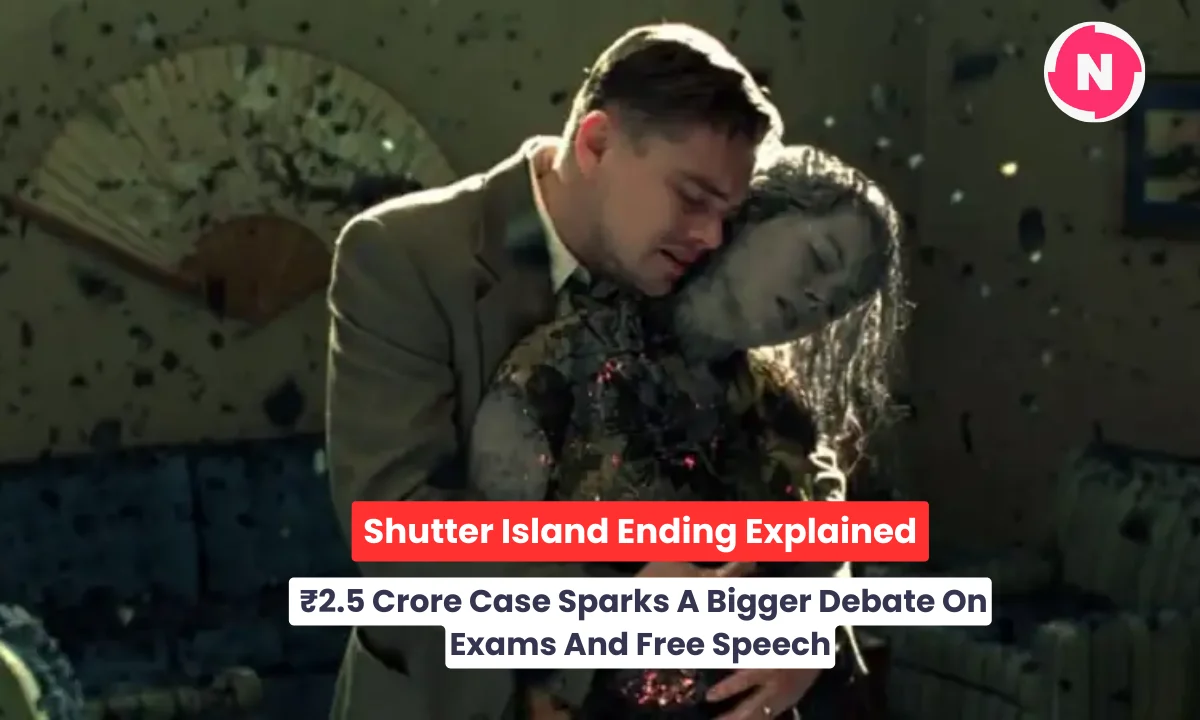
Shutter Island ending explained is still one of the most searched film debates online. More than 15 years after release, viewers are still dissecting what really happened to Teddy Daniels at Ashecliffe Hospital. Was he a broken man who relapsed into delusion, or did he make a conscious choice to erase himself?
Directed by Martin Scorsese and starring Leonardo DiCaprio, Shutter Island remains one of the most psychologically layered thrillers of modern cinema. The twist is not just shocking. It is emotionally brutal. And that final question continues to divide audiences in 2025.
Key Takeaways
- Teddy Daniels is revealed to be Andrew Laeddis, a patient at Ashecliffe Hospital.
- The entire investigation was a role playing therapy designed by Dr. Cawley.
- The final line was added to the film and not present in the novel.
- Two major interpretations exist: relapse into delusion or conscious self sacrifice.
- Public opinion still debates the ending, comparing it to films like Inception.
- The ambiguity is the reason the film remains culturally relevant.

The Big Reveal At The Lighthouse
At first glance, Shutter Island plays like a noir mystery. A U.S. Marshal investigates the disappearance of Rachel Solando from Ashecliffe Hospital. Storms rage. Staff act suspicious. Ward C feels like a nightmare. The lighthouse becomes a symbol of hidden truth.
Then everything flips.
Teddy Daniels is actually Andrew Laeddis. He is Patient 67. His wife Dolores Chanal drowned their three children. In shock and rage, Andrew shot her. The trauma from World War II, including the liberation of Dachau, deepened his psychological collapse. To survive the guilt, he constructed a new identity. He became the hero instead of the monster.
The investigation was therapy. Dr. John Cawley and Dr. Lester Sheehan staged the entire scenario to break Andrew’s dissociative delusion and avoid lobotomy.
On second watch, the entire plot retroactively clicks. Every suspicious glance from the staff, every oddly timed interruption, every too convenient clue suddenly makes sense.
Understanding The Role Playing Experiment
The doctors believed traditional treatment had failed. Andrew repeatedly slipped back into fantasy. So they designed an immersive psychodrama. Every nurse, orderly, and patient played along.
Here is a breakdown of the key elements:
| Element | What Andrew Believed | The Reality |
|---|---|---|
| Teddy Daniels | U.S. Marshal | Andrew Laeddis, patient |
| Chuck Aule | Partner | Dr. Lester Sheehan |
| Rachel Solando | Missing patient | Role played by staff |
| Lighthouse | Secret experiments | Confrontation site |
| Andrew Laeddis | Arsonist killer | Himself |
Even the names were anagrams. Edward Daniels rearranges into Andrew Laeddis. Rachel Solando rearranges into Dolores Chanal. These clues reward rewatching. Many fans on X say the film becomes even stronger the second time.
Clues & Foreshadowing You Missed
This is where the film truly becomes masterful. On rewatch, the twist is hiding in plain sight.
- Title Anagram – “Shutter Island” rearranges into “Truth and Lies” and closely resembles “Truth Denials.” The entire narrative is about refusing truth.
- Teddy Never Lights His Own Cigarettes – He constantly borrows cigarettes or matches. A subtle symbol of lost agency and constructed identity.
- Water Phobia – He feels sick on the ferry. Water appears in dreams and floods. Subconscious guilt over his drowned children manifests physically.
- The Law of 4 and Patient 67 – The “missing” patient is mathematically himself. The hospital roster never truly adds up.
- Dachau Flashbacks & Eyebrow Cut – The facial wound continuity subtly shifts between memory and reality, signaling fractured perception.
- Dolores’ Warning – In dreams, she tells him Laeddis is on the island. She is literally telling him he is the killer.
- The “RUN” Note – Rachel’s cryptic message is clearly staged, but Teddy interprets it as conspiracy confirmation.
- Ward C Inmates – One prisoner mimics a gun with his fingers and mouths “You’re not a cop.” It is a direct hint.
- Staff Reactions – Guards hesitate before handing him a gun. They watch him carefully. They are not threatened – they are monitoring.
- The Lighthouse Symbol – Traditionally a symbol of illumination. Here it becomes both enlightenment and destruction. Truth leads to psychological annihilation.
On second watch, the entire plot retroactively clicks every suspicious staff behavior makes sense.
The Final Scene That Changed The Debate
After accepting the truth, Andrew appears calm. He recounts the facts clearly. The doctors feel hopeful. Then comes the bench scene.
He calls Sheehan “Chuck” again. It looks like relapse. Dr. Cawley signals for the orderlies. The lobotomy will proceed.
Then Andrew says:
“Which would be worse. To live as a monster. Or to die as a good man.”
This line was not in Dennis Lehane’s original novel. It was added by screenwriter Laeta Kalogridis for the film adaptation.
That single sentence created two dominant interpretations.
Interpretation One: Complete Relapse
In this reading, Andrew truly regresses. The therapy failed again. His mind retreats into the Teddy persona. The question is simply a fragment of confused thought.
Lehane later explained in interviews (including a widely cited MTV conversation) that he sees the line as a momentary flash of clarity a brief recognition of truth that Andrew cannot sustain. He quickly lets it go. It is not a strategic sacrifice. It is collapse.
If this is true, the ending is tragic in a clinical sense. The system failed. Treatment failed. The mind broke permanently.
The book’s ending feels bleaker and clearer: Andrew slips back, and the doctors accept defeat.
Interpretation Two: Conscious Sacrifice
This is the version many modern viewers favor.
Andrew understands everything. He knows he killed his wife. He knows his children are gone. He knows the weight of guilt will never disappear.
So he chooses oblivion.
By pretending to relapse, he ensures the lobotomy happens. He erases Andrew Laeddis. He dies as Teddy Daniels. The hero. Not the monster.
Scorsese’s psychiatric advisor, James Gilligan, supported this reading. He described it as a form of “vicarious suicide” self destruction without physically killing oneself.
Recent 2025 retrospectives argue that Scorsese’s added line makes the film more emotionally devastating than the novel. The ambiguity shifts the story from medical tragedy to existential sacrifice.
This interpretation gives Andrew agency. It makes the ending even darker.
Book Ending vs. Movie Ending
| Element | Novel | Film |
|---|---|---|
| Final Line | No “good man” question | Added philosophical question |
| Andrew’s State | Implied relapse | Ambiguous |
| Tone | Clinically tragic | Existentially tragic |
| Reader/Viewer Role | Observer | Participant in interpretation |
The film transforms certainty into debate.
The Psychology & 1954 Historical Context
Set in 1954, the film reflects a transitional era in American psychiatry. Lobotomies were still being performed widely in the United States. Tens of thousands occurred before reforms in the 1960s reduced the practice.
Ashecliffe’s experiment was presented as progressive. Role play therapy was a humane last attempt to reach Andrew before irreversible surgery.
Possible diagnoses based on modern analysis:
- Severe PTSD from WWII combat exposure
- Complicated grief disorder
- Dissociative disorder
- Trauma induced delusional disorder
The film’s horror is not supernatural. It is systemic and psychological. It reflects a time when mental health treatment was evolving and often destructive.
Fan Theories & Ongoing Debates (2025–2026)
Beyond the two main interpretations, fringe theories still circulate:
- Hospital Conspiracy Theory – Some argue Teddy was sane and the institution gaslighted him. This theory struggles under rewatch scrutiny but persists online.
- No Lobotomy Theory – The film cuts before the procedure. Some speculate Dr. Cawley hesitates.
- Partial Awareness Loop – Andrew cycles between awareness and delusion, never fully stable in either state.
On X in early 2026, viewers still post reactions like:
- “Rewatched and caught all the details. Still hits hard.”
- “That final line makes it sadder every time.”
- “I thought I knew the twist. I didn’t.”
Few thrillers sustain this level of engagement fifteen years later.
Why The Ending Still Works Today
Shutter Island refuses to give closure. That is its strength.
The lighthouse stands as a symbol. It represents exposure. Illumination. Painful truth. Yet even at the top, certainty remains out of reach.
The film explores unreliable perception, guilt, trauma, and sanity without offering a clean resolution. Either Andrew relapses. Or he sacrifices himself. Both outcomes are devastating.
That is why discussions continue in 2025. The ambiguity invites participation. Viewers become part of the diagnosis.
Rewatch Guide
- First viewing: Experience it blind.
- Second viewing: Pay attention to staff behavior and cigarette exchanges.
- Pause at the lighthouse reveal and mentally replay the first half.
- Watch the bench scene twice. His tone shifts subtly before the final line.
The film is designed to reward scrutiny.
Frequently Asked Questions
Did the treatment work?
Possibly. If you believe the sacrifice theory, it worked but at a cost. If you believe relapse, it failed completely.
Is there a post credits scene?
No. The ambiguity ends on the bench.
How does it compare to Inception?
Both films leave reality unresolved. But while Inception debates perception, Shutter Island debates morality and identity.
Similar Mind Bending Films
If you loved this ending, consider:
- Fight Club
- Memento
- Inception
Each explores fractured identity, unreliable memory, and subjective truth.
Final Verdict: Monster Or Good Man
There is no definitive answer. That is intentional.
If Andrew relapsed, the story becomes about the destructive power of trauma. If he chose lobotomy, it becomes a story about agency within madness.
Both interpretations mirror the film’s core theme. Reality is fragile. Identity is constructed. Memory can betray you.
And sometimes the scariest place is not Ward C or the lighthouse.
It is the human mind.
Tags: shutter island ending explained, teddy daniels twist, andrew laeddis meaning, martin scorsese thriller, leonardo dicaprio performance, psychological thriller analysis, movie ending breakdown
Related Posts :



Share This Post