Gold & Silver Prices: Sharp Swings Shake Markets, What Is Driving The Volatility In February 2026
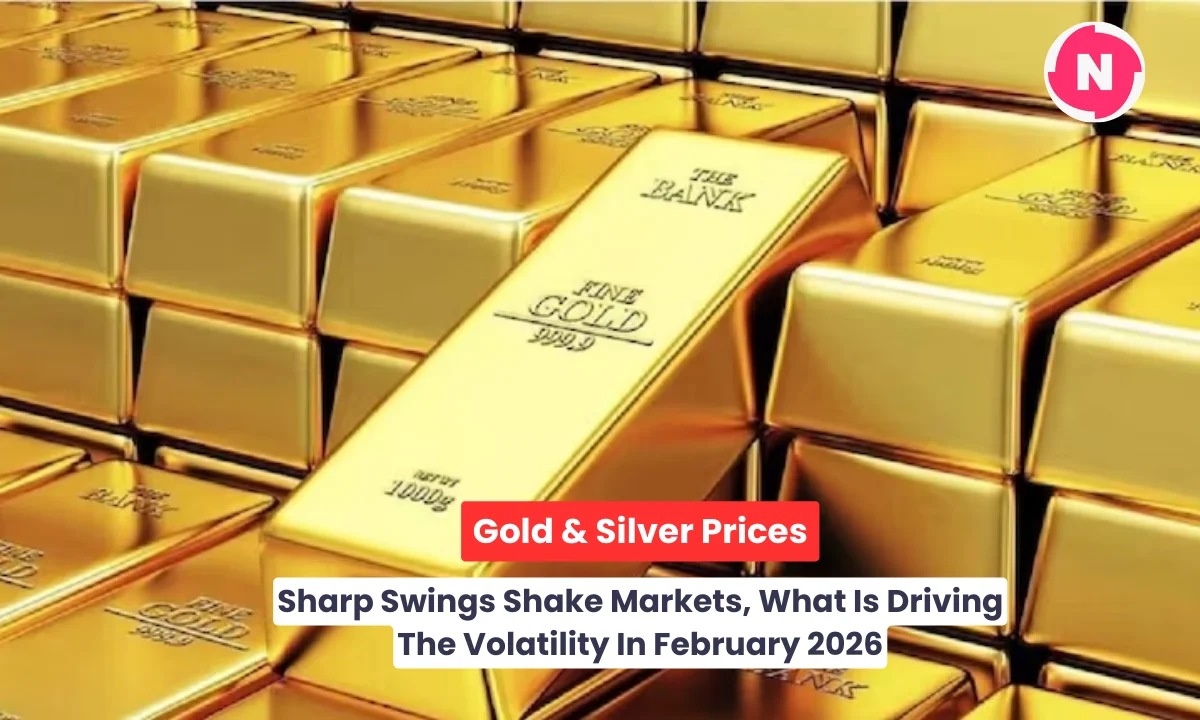
Gold & Silver Prices: Sharp Swings Shake Markets, What Is Driving The Volatility In February 2026
Gold & silver prices have become one of the most discussed topics in financial markets in February 2026, following an extraordinary rally in 2025 and a sudden, sharp correction at the start of this year. Investors, traders, and even policymakers are closely tracking every move as prices swing wildly across global and Indian markets. With gold hovering near record levels and silver witnessing extreme volatility, the debate has shifted from excitement to caution.
The recent movements in gold and silver prices are not just about profit booking or short term trading. They reflect deeper changes in global monetary expectations, central bank actions, geopolitical developments, and investor psychology. From record highs to sudden sell offs, precious metals are testing patience and conviction across markets.
Key Takeaways
- Gold and silver prices saw historic rallies in 2025 followed by sharp corrections in early 2026
- Silver experienced heavier losses compared to gold due to speculative positioning
- RBI and global central banks are closely watching precious metals for inflation impact
- Public sentiment remains cautious in the short term but optimistic in the long term
- Structural factors like central bank buying and geopolitical risks continue to support prices
What Triggered The Recent Fall In Gold And Silver Prices?
The sudden decline in gold and silver prices during late January and early February 2026 surprised many market participants. After months of strong upward momentum, both metals faced intense selling pressure across international and domestic markets.
One of the key triggers was profit booking after an overextended rally. Gold had moved close to the psychological $5,000 per ounce level, while silver surged to record highs that many traders felt were disconnected from near term fundamentals. Such sharp rallies often attract speculative capital, which tends to exit quickly during signs of policy or sentiment shifts.
Another major factor was changing expectations around global monetary policy. Signals of a less accommodative stance from US Federal Reserve leadership prospects strengthened the US dollar, which typically pressures gold and silver prices. Higher dollar strength reduces the appeal of non yielding assets like precious metals in the short term.
How Global Markets Reacted To The Volatility
Global commodity markets witnessed one of the most volatile phases in decades. Gold prices dropped sharply within days, while silver saw extreme single day declines that reminded traders of historical crashes.
Silver, in particular, reacted more aggressively due to its dual nature as both a precious metal and an industrial commodity. Thin liquidity and leveraged positions amplified the downside move, causing sharp intraday swings.
Despite the sell off, prices did not collapse entirely. Partial recoveries were seen as dip buyers stepped in, suggesting that long term confidence has not completely faded.
Gold And Silver Prices In India: Current Scenario
In India, gold and silver prices mirrored global weakness but remained elevated compared to historical averages. Domestic prices were influenced by international spot rates, currency movement, and local demand conditions.
Below is a snapshot of recent price movement in India during early February 2026.
| Metal | Recent Price Level | Short Term Trend |
|---|---|---|
| Gold 24K (10g) | Around Rs 1.50 lakh | Range bound |
| Gold 22K (10g) | Around Rs 1.40 lakh | Mild weakness |
| Silver (1 kg) | Rs 2.25 to Rs 2.45 lakh | High volatility |
Even after the correction, gold prices remain significantly higher than previous years, highlighting the strength of the long term trend.
Also Read

INDIA Free To Buy Oil From Anyone: Russia Pushes Back On Trump’s Claim After US-India Deal
RBI’s Focus On Gold And Silver Prices
An important development in 2026 has been the Reserve Bank of India explicitly factoring gold and silver prices into its inflation assessment. Precious metals have contributed noticeably to headline inflation numbers, prompting policymakers to monitor them alongside essential commodities.
The RBI has clarified that core inflation excluding precious metals remains under control. However, the volatility in gold and silver prices adds uncertainty to inflation forecasts, especially for an import dependent economy like India.
India’s reliance on imported gold means that global price swings and currency movements directly affect domestic inflation, household spending, and investment behavior.
Structural Factors Supporting Long Term Prices
Despite recent volatility, several long term drivers continue to support gold and silver prices.
Central Bank Buying
Global central banks, especially in emerging markets, have been accumulating gold as part of reserve diversification strategies. This sustained demand provides a strong base for prices over time.
Geopolitical Uncertainty
Ongoing geopolitical tensions and shifting global alliances increase demand for safe haven assets. Gold, in particular, continues to be viewed as a hedge during periods of uncertainty.
Industrial Demand For Silver
Silver benefits from growing industrial usage in sectors like renewable energy, electric vehicles, and electronics. This structural demand adds support beyond investment flows.
Public Opinion On Gold And Silver Prices
Public sentiment on social media platforms reflects a mix of emotions. Many traders expressed shock at the extreme volatility, especially in silver, calling it one of the most unpredictable moves they have witnessed.
Some investors voiced frustration over losses following the hype driven rally, questioning the timing of entry and exit. Others pointed out the disconnect between paper prices and physical market premiums, suggesting that underlying demand remains firm.
At the same time, bullish voices continue to highlight technical support levels and long term targets. Many believe the recent fall is a correction within a broader uptrend rather than a trend reversal.
Is This A Correction Or A Trend Reversal
This question dominates current discussions around gold and silver prices. While short term momentum has weakened, long term charts still show strong upward trends.
Corrections are a normal part of extended rallies, especially after rapid price appreciation. The key difference between a correction and a reversal lies in whether structural drivers weaken significantly.
So far, central bank demand, geopolitical risk, and inflation hedging behavior remain intact, suggesting that the broader trend has not broken.
What Investors Are Watching Next
Market participants are closely monitoring several upcoming factors that could influence gold and silver prices.
- US employment and inflation data
- Central bank policy signals
- Currency movement and bond yields
- Geopolitical developments
- Physical demand trends
These variables will likely determine whether prices stabilize or face further volatility in the near term.
Final Thoughts On Gold And Silver Prices
Gold and silver prices in February 2026 reflect a market adjusting after an extraordinary rally. The recent volatility has tested confidence but has not erased the long term appeal of precious metals.
For investors, the focus has shifted from chasing momentum to understanding risk and timing. While short term fluctuations may continue, the structural reasons behind strong gold and silver prices remain relevant in the current global environment.
Tags: gold price today, silver price crash 2026, gold silver prices February 2026, precious metals volatility, RBI inflation outlook, gold market analysis, silver market trends
Related Posts :


Share This Post