COHERENCE ENDING EXPLAINED: WHY THE FINAL SCENE FEELS SO UNSETTLING
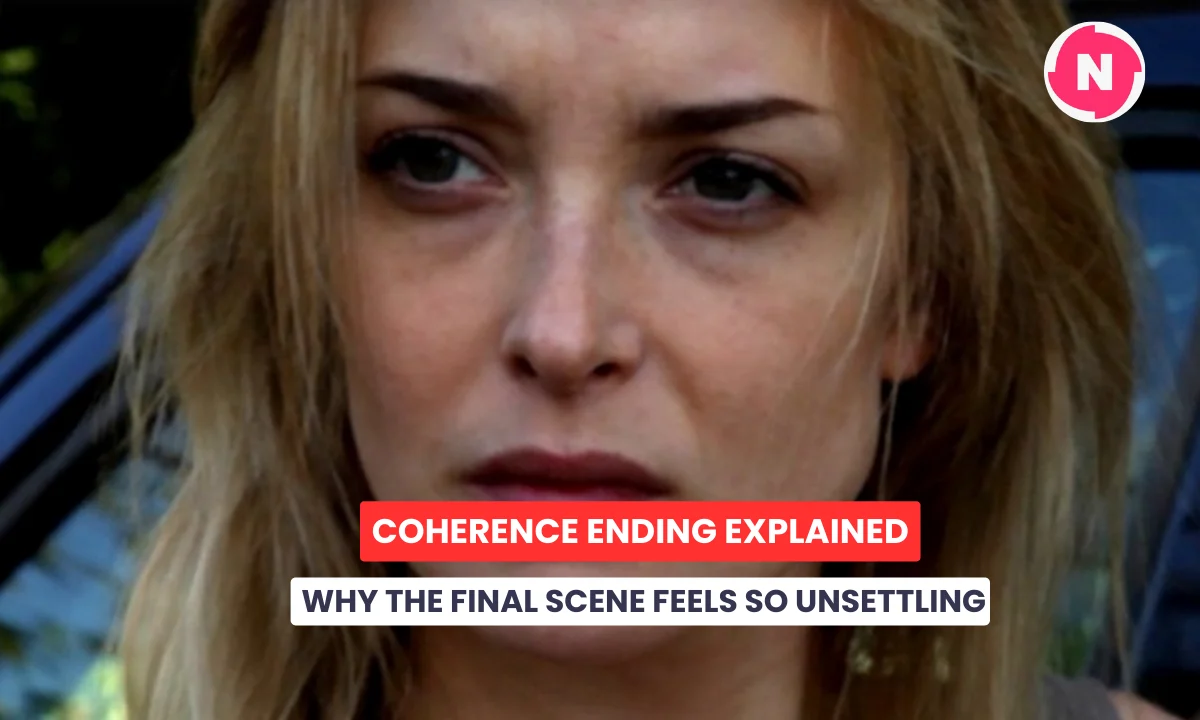
COHERENCE ENDING EXPLAINED WHY THE FINAL SCENE FEELS SO UNSETTLING (1)
Coherence ending explained is one of the most searched phrases among sci fi film fans even more than a decade after the movie’s release. The 2013 indie film Coherence continues to confuse and impress viewers because its final moments refuse to give comfort or clear victory.
What looks like a smart escape turns into a quiet moral collapse. That is why the ending still sparks debates across Reddit, X, and film forums.
At its core, Coherence is not about science facts or multiverse rules. It is about people under pressure. The ending works because it forces the audience to sit with Em’s choice and its consequences. The last phone call is not a twist for shock value. It is the logical result of everything she does.
KEY TAKEAWAYS
- The film follows only one Em from start to finish
- The comet creates overlapping realities with random switching
- Em intentionally steals another version of her life
- The final phone call exposes her decision instantly
- The ending focuses on moral consequences, not sci fi victory
- No version of Em truly “wins”
UNDERSTANDING THE CORE IDEA OF COHERENCE
Coherence begins as a simple dinner party story. Eight friends gather while a comet passes unusually close to Earth. Phones lose signal. Power cuts out. One nearby house still has lights on. That small difference triggers everything.
The comet causes multiple realities to overlap. Each house on the street exists in many versions. When someone walks through the dark area outside, they leave their current reality and enter another at random. There is no control and no way to return intentionally.
This randomness is important. The film never presents a system that can be mastered. Every attempt to regain control only makes things worse.
WHY EM IS THE CENTER OF THE STORY
The camera follows only Em. Even when other characters switch realities, the audience stays with her perspective. This is why the ending matters so much. The story is not about solving the puzzle. It is about watching one person respond to chaos.
Em’s defining trait is hesitation. Before the dinner party, she missed a major ballet opportunity because she could not decide fast enough. Her relationship with Kevin suffers from the same issue. She delays. She avoids clear choices. The comet forces her to face that flaw.
When realities start collapsing into each other, Em finally does what she has never done before. She acts decisively.
HOW REALITY SWITCHING ACTUALLY WORKS
One common misunderstanding is that characters switch places deliberately. They do not. The dark space functions like a roulette wheel.
Here is how it works in simple terms:
| Action | Result |
|---|---|
| Walking into the dark area | Exit current reality |
| Re entering a house | Enter a random reality |
| Trying to go back | No control or guarantee |
| Waiting for the comet to pass | Reality becomes permanent |
Beth and Lee never leave the house. That is why they remain consistent anchors. Everyone else becomes mixed across realities without knowing when it happens.
The boxes with random items and numbered photos are not clues for escape. They are attempts to create identity in a situation where identity no longer holds.
WHY THE GROUP FALLS APART
As soon as people realize they might not belong where they are, trust collapses. Conversations repeat slightly differently. Memories no longer align. Objects in the box change.
Instead of working together, the group turns inward. Mike becomes aggressive. Kevin grows emotionally distant. Laurie becomes a trigger for insecurity. Everyone starts acting out their worst tendencies.
The film suggests that chaos does not create monsters. It removes social filters.
EM’S DECISION TO LEAVE
Em eventually understands something the others do not accept. There is no safe way back. Waiting means being trapped in a random reality forever.
So she leaves alone.
She walks from house to house, peeking through windows. Every reality shows some version of conflict. In some, Kevin and Laurie are closer. In others, the group is already violent.
Then she finds one house that feels right.
WHAT MAKES THE FINAL REALITY DIFFERENT
The final house is different because nothing went wrong.
- No power outage
- No phone damage
- No reason to leave the house
- No exposure to the dark space
Because the group never left, their reality stayed intact. Em in this world made different choices earlier in life. She accepted the ballet role. She committed to Kevin. Her life looks stable.
This is the life Em believes she deserves.
THE MOST IMPORTANT MOMENT IN THE FILM
Em does not switch accidentally. She attacks her alternate self.
This matters.
She drugs her. Locks her away. Later hits her again. This is the first fully intentional act of violence in the story. It is also the moment the film passes moral judgment.
Em is no longer reacting. She is taking.
THE FINAL SCENE EXPLAINED
The next morning feels calm. Breakfast is normal. The house is peaceful. Em believes she succeeded.
Then Kevin’s phone rings.
The call is from Em.
Not the one standing next to him.
Kevin does not say anything. He just looks at her. In that look, everything breaks.
The film cuts to black because nothing else needs to be shown.
WHAT THE ENDING ACTUALLY MEANS
The ending is not ambiguous in outcome. It is ambiguous in aftermath.
What we know for certain:
- There are now two Em figures in one reality
- The comet has passed
- Reality switching has stopped
- Em cannot escape consequences
This is not a victory. It is a trap.
Even if the other Em leaves or is hidden, Kevin now knows the truth. Trust is broken at the deepest level. Em has achieved the life she wanted by becoming someone capable of stealing it.
PUBLIC OPINION AND INTERPRETATION
Recent discussions on X and Reddit show strong agreement on one point. The ending works because it refuses comfort.
Common reactions include:
- Viewers calling it one of the smartest low budget sci fi films
- Praise for the moral weight of the final decision
- Appreciation for the lack of exposition or explanation
- Rewatch value increasing with each viewing
Some viewers feel uneasy because the film feels more like psychological horror than science fiction. Others admire that discomfort. Many note that the ending punishes selfish behavior without spelling it out.
A recurring sentiment online is that Em’s worst flaw was not indecision. It was believing a better life could be taken without cost.
THEMES THAT MAKE THE ENDING HIT HARDER
Identity And Selfishness
Every version of Em believes she is the real one. The film asks whether that belief justifies harm.
Choice And Responsibility
The multiverse does not remove accountability. It multiplies it.
Control Versus Acceptance
The characters who try to dominate the situation suffer the most.
WHY THE ENDING STAYS WITH PEOPLE
Coherence does not explain everything because explanation is not the point. The ending works because it mirrors real life choices. You can make a bold decision. You can even get what you want. But you cannot choose how it changes you.
That final look from Kevin is not about science. It is about recognition.
He sees her.
And she knows it.
Tags: coherence ending explained, coherence movie meaning, coherence multiverse, coherence em character analysis, indie sci fi films, psychological sci fi, movie ending explained
Related Posts :



Share This Post