Petrol Price Hike 2026: Why Fuel Rates Suddenly Jumped Again And How It May Hit Everyday Life
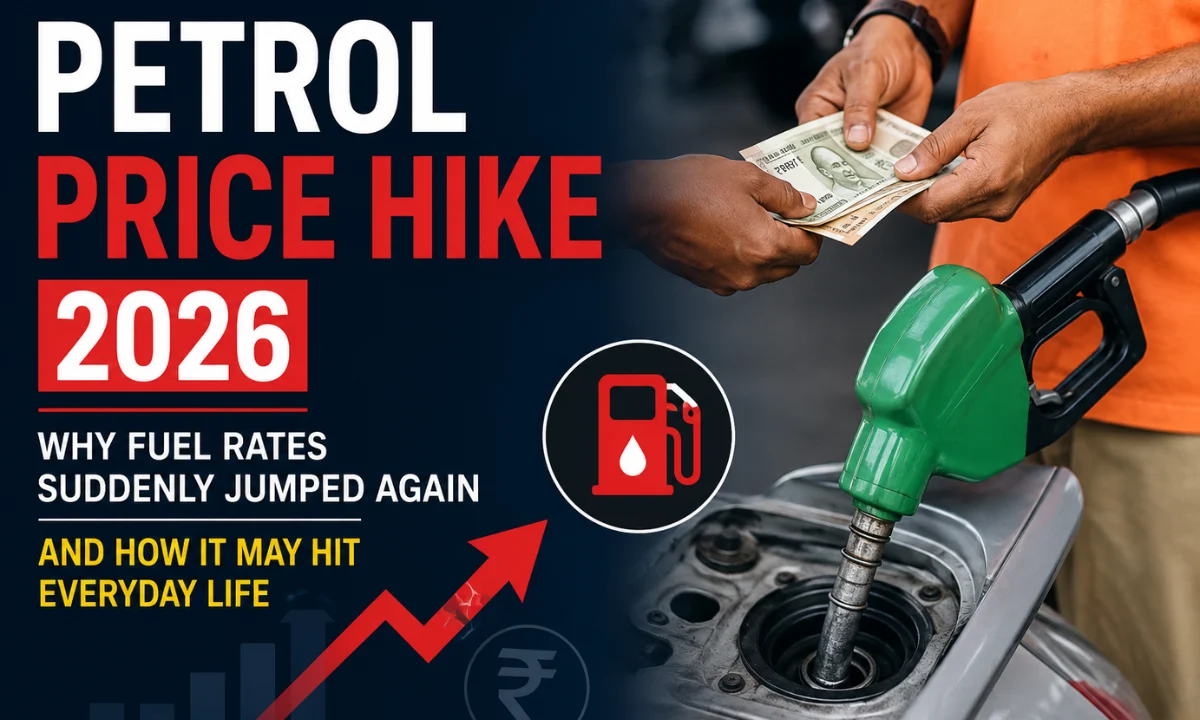
Petrol Price Hike 2026: Why Fuel Rates Suddenly Jumped Again And How It May Hit Everyday Life
After nearly four years of stable fuel prices, India has finally witnessed a major petrol price hike. On May 15, 2026, state-run oil companies increased petrol and diesel rates by around ₹3 per litre across the country. The decision came after rising global crude oil prices and growing pressure on oil marketing companies that were reportedly facing massive losses.
The move has already triggered strong reactions online. From daily commuters to transport businesses, many people are worried about how this will affect monthly budgets, grocery prices and inflation. On social media, memes are trending. But behind the jokes, there is genuine concern about rising living costs.
Key Takeaways On Petrol Price Hike
- Petrol and diesel prices increased by around ₹3 per litre across India
- This is the first major fuel price hike in almost four years
- Rising global crude oil prices linked to Middle East tensions are the main reason
- Oil companies were reportedly facing losses of over ₹1 lakh crore
- Petrol prices crossed ₹100 in several major cities
- Experts believe more fuel price hikes are possible in coming months
- Inflation, transport costs and daily expenses may rise further
- Public reaction online is mostly negative and frustrated
Why Petrol And Diesel Prices Increased Suddenly
The biggest reason behind the latest petrol price hike is the sharp rise in global crude oil prices. Since the escalation of tensions in the Middle East, especially around the US-Iran conflict and supply disruptions near the Strait of Hormuz, crude oil prices have remained above $100 per barrel for a long period.
India imports most of its crude oil requirements from other countries. So when global oil becomes expensive, fuel prices in India also come under pressure.
For months, oil marketing companies like Indian Oil, Bharat Petroleum and Hindustan Petroleum were absorbing losses instead of increasing retail prices immediately. But according to reports, the situation became financially unsustainable.
Here’s a quick overview:
| Factor Behind Hike | Impact |
|---|---|
| Global crude oil above $100 | Higher import costs |
| Middle East tensions | Supply uncertainty |
| Pressure on OMCs | Massive losses |
| Long fuel price freeze | Delayed adjustment |
| Rising transport expenses | Inflation fears |
Experts say the government tried to delay the hike for as long as possible, especially after reducing excise duties earlier. But eventually the gap became too large to manage.
New Petrol Prices In Major Cities
The latest increase pushed fuel prices above ₹100 in several cities.
| City | Petrol Price | Diesel Price |
|---|---|---|
| Delhi | ₹97.77 | ₹90.67 |
| Mumbai | ₹106+ | ₹93+ |
| Kolkata | ₹108+ | ₹95+ |
| Chennai | ₹103+ | ₹95+ |
| Bengaluru | ₹106.17 | ₹94.10 |
| Hyderabad | ₹100.89 | ₹98.96 |
Prices vary between states because fuel still remains outside GST. State taxes and VAT rates play a big role in final pricing.
Why Experts Think More Hikes Could Come
Many economists believe this may not be the final increase. The recent ₹3 hike is being seen as a “calibrated adjustment” instead of a full correction. Reports suggest oil companies are still under pressure because global crude prices remain elevated.
If the Middle East conflict continues or oil supply disruptions worsen, petrol and diesel prices may rise again in smaller phases. Several economists have already warned about this possibility.
Reasons More Hikes May Happen
- Crude oil prices are still volatile
- Strait of Hormuz supply concerns continue
- OMC losses are still high
- Government may avoid sudden large increases
- Inflation management requires gradual hikes
Some experts are predicting cumulative fuel price increases of nearly 10% over the next few months if conditions remain unchanged.
How This Could Affect Daily Life
Fuel price hikes never stay limited to petrol pumps. They slowly affect almost every part of the economy. Diesel is especially important because it powers trucks, transport systems and logistics operations. Once diesel becomes expensive, transportation costs rise across industries.
That impact eventually reaches consumers.
Areas That May Become More Expensive
| Sector | Expected Impact |
|---|---|
| Grocery delivery | Higher charges |
| Cab fares | Surge pricing |
| Vegetables and food | Transport cost increase |
| E-commerce delivery | Logistics pressure |
| Bus operators | Fare revision |
| Manufacturing | Rising production costs |
Transport associations are already warning that freight charges could increase by around 2-3% soon. For middle class families, this creates pressure on monthly budgets because fuel affects both direct travel expenses and indirect household costs.
Inflation Worries Are Growing Again
Economists say the fuel hike may increase India’s retail inflation in the coming months. Several financial institutions have revised their inflation forecasts upward after the fuel price revision.
The concern is not just petrol prices themselves. The bigger issue is the ripple effect.
When transport costs rise:
- Food becomes expensive
- Services become expensive
- Delivery charges increase
- Manufacturing costs rise
Some analysts estimate the fuel hike alone could add 10 to 25 basis points to headline inflation. That may not sound huge on paper, but for households already dealing with expensive groceries and rising bills, it matters a lot.
Public Reaction On X Is Full Of Frustration And Memes
The reaction online has been intense. Many users on X are sharing memes about rising daily expenses and how difficult commuting is becoming. Others are questioning why fuel prices increased immediately after elections.
One common theme across posts is frustration from salaried middle class workers who already feel squeezed by inflation. Trending conversations include:
- “How are people managing daily travel now?”
- Fuel saving hacks
- Comparing petrol prices city by city
- Political criticism
- EV and CNG discussions
- Rising cab fares and food delivery costs
At the same time, some users are defending the hike by pointing to global crude oil realities and supply disruptions. Overall though, the dominant public mood remains negative.
Is This Pushing More People Toward EVs?
One interesting shift happening online is growing interest in electric vehicles and fuel alternatives. Search trends around EV scooters, CNG cars and hybrid vehicles have increased after the latest hike. Many people are now calculating long term fuel savings more seriously.
Public transport discussions are also rising again in metro cities. While EV adoption still faces challenges like charging infrastructure and upfront cost, repeated fuel hikes are clearly changing consumer thinking.
What Happens Next?
The next few weeks will depend heavily on global crude oil prices. If geopolitical tensions ease and oil prices cool down, fuel prices may stabilize. But if crude remains above current levels, more gradual hikes cannot be ruled out.
Experts believe the government may try balancing inflation concerns with financial pressure on oil companies. For consumers, that means uncertainty is likely to continue for some time.
My Final Words On Latest Petrol Price Hike 2026
The latest petrol price hike marks a definitive end to nearly four years of fuel price stability across India. Driven by escalating global crude volatility and mounting losses for domestic oil marketing companies, this sudden retail adjustment has caught consumers completely off guard.
To protect your household budget from this price surge, take these immediate, practical steps:
- Optimize Spends: Switch fuel purchases to co-branded credit cards (such as those partnered with IOCL, BPCL, or HPCL) to earn 4% to 5% value back and waive surcharges.
- Leverage Borders: If commuting near state lines, fuel up where state VAT rates are lower.
- Vehicle Efficiency: Maintain correct tire pressure and avoid aggressive driving to prevent a 10% drop in mileage.
Related Posts :

Share This Post