US Strategic Petroleum Reserve: Why America’s Emergency Oil Stockpile Is Back In Global Focus
US Strategic Petroleum Reserve: Why America’s Emergency Oil Stockpile Is Back In Global Focus
Oil prices are rising again. The Strait of Hormuz crisis has pushed global markets into panic mode. Because of that, the US Strategic Petroleum Reserve or SPR is once again becoming one of the biggest talking points in energy markets.
The Trump administration has already started releasing millions of barrels from emergency reserves to calm global supply fears. But people are also asking one big question. What happens if another crisis hits while reserves are already near multi year lows?
The latest SPR drawdown is not just about oil anymore. It is now connected with geopolitics, inflation, fuel prices, US energy security, and even election season politics. Traders are watching inventory numbers daily. Common people are watching petrol prices at gas stations. On social media too, debates around the SPR are getting intense as many users feel the reserve should only be used for real emergencies and not short term price management.
Key Takeaways On US Strategic Petroleum Reserve
- The US Strategic Petroleum Reserve currently holds around 384 million barrels
- The Trump administration plans to release 172 million barrels in coordination with the IEA
- The release comes after disruptions caused by the US Israel conflict with Iran
- Closure threats around the Strait of Hormuz impacted nearly 20% of global oil transit
- Public opinion remains divided over draining emergency reserves
- Officials say borrowed oil will be returned with extra premium barrels
- Critics worry about long term energy security risks if replenishment slows down
What Is The US Strategic Petroleum Reserve?
The Strategic Petroleum Reserve is basically America’s emergency oil backup system. It was created after the 1970s oil crisis to protect the country during severe supply disruptions. The reserve stores crude oil in giant underground salt caverns across Texas and Louisiana.
At full capacity, the SPR can hold around 714 million barrels of crude oil. Right now though, inventory levels are sitting near 384 million barrels according to recent reports. That is nearly half of total capacity and among the lowest levels seen in decades.
The SPR is usually used during wars, natural disasters, or major global supply shocks. In 2026, the trigger is the escalating Middle East conflict and disruption around the Strait of Hormuz.
Why The US Is Releasing Oil Right Now
The latest drawdown started after tensions between the US, Israel, and Iran severely impacted oil transportation routes. Iran’s blockade threats around the Strait of Hormuz created panic because this route handles roughly one fifth of the world’s oil supply.
As oil prices jumped above $100 per barrel in some sessions, the International Energy Agency coordinated a global emergency response. The US agreed to release 172 million barrels as part of a larger 400 million barrel international effort.
Here’s a quick breakdown of the current SPR situation:
| Factor | Current Situation |
|---|---|
| Current SPR Inventory | Around 384 million barrels |
| SPR Maximum Capacity | Around 714 million barrels |
| Planned US Release | 172 million barrels |
| Global Coordinated Release | Around 400 million barrels |
| Main Trigger | Iran conflict and Strait of Hormuz disruption |
| Current Oil Price Trend | Highly volatile and elevated |
The Department of Energy recently approved another 53.3 million barrel exchange program involving companies like ExxonMobil, Marathon Petroleum, BP, and Phillips 66.
How The SPR Exchange System Actually Works
One thing many people do not understand is that this is not always a straight giveaway of oil.
A large part of the current release works through an exchange system. Companies borrow oil now during supply stress and later return the barrels with extra premium volumes. Officials say this helps stabilize markets without directly costing taxpayers.
The Trump administration claims the reserve will eventually become even larger than before because companies are expected to return around 1.2 barrels for every barrel borrowed.
Still, many analysts are skeptical. Refilling the SPR is not easy because future oil purchases depend on market prices, refinery demand, export competition, and geopolitical conditions.
Why Critics Are Worried About Low Inventory Levels
This is where the debate becomes serious. Many energy experts believe the SPR should remain untouched unless the country faces a direct national emergency. Critics argue repeated drawdowns reduce America’s long term energy security cushion.
Some users on X called the latest release “desperation instead of strategy.” Others compared the current drawdowns with the Biden era releases from 2021 to 2023.
A major concern is timing. If another supply disruption happens before reserves are replenished properly, the US may have less emergency flexibility than before.
There are also infrastructure concerns. Since the oil is stored in underground salt caverns, constant heavy drawdowns and refills can create maintenance challenges over time.
Public Opinion On X And Social Media (The Data Is Taken From X)
Public sentiment around the Strategic Petroleum Reserve feels very mixed right now. Some people support the move because they believe stabilizing fuel prices is necessary during a global crisis. Rising gasoline prices directly impact inflation and daily household expenses. For many Americans, cheaper fuel matters immediately.
But another side feels uncomfortable watching emergency reserves decline this quickly. Here are some common opinions trending online:
What Supporters Are Saying
- The government acted quickly during a major global crisis
- Coordinated IEA action may prevent even worse oil price spikes
- Exchange programs could eventually refill the SPR with extra barrels
- Strong US export capacity is helping allies manage shortages
What Critics Are Saying
- The SPR should not become a regular price management tool
- Inventory levels are already dangerously low
- Replenishment promises may take years
- Energy independence should focus more on domestic production growth
This public debate is one reason the topic keeps trending heavily across financial and geopolitical discussions online.
How Oil Markets Reacted To The SPR Release
Historically, SPR releases usually provide short term relief instead of long term solutions. Markets often react positively for a few weeks because emergency releases improve supply confidence. Traders also view coordinated IEA action as a psychological signal that governments are actively managing the crisis.
But once the temporary supply enters markets, prices often return to reacting mainly to real global production and geopolitical risks. That is exactly what analysts are watching now.
Even after major SPR announcements, oil prices remain highly sensitive to any updates around Iran, shipping disruptions, or future military escalation in the Middle East.
Can The US Refill The SPR Quickly?
Technically yes. Practically, it is complicated. Governments usually prefer refilling reserves when oil prices fall. Buying large amounts of crude during expensive market conditions can increase costs significantly.
Right now, the administration says replenishment will happen gradually through exchange returns and future purchases. But there is still no detailed public timeline explaining how fast the reserve can recover back toward previous levels.
Here is the bigger challenge:
- High oil prices make refilling expensive
- Strong export demand competes for supply
- Refineries still need crude inventories
- Another geopolitical event could delay purchases again
That is why many experts believe rebuilding the SPR could take several years.
Why The Strategic Petroleum Reserve Still Matters
Even with all the criticism, the SPR remains one of the most powerful emergency tools in global energy markets. Very few countries can release oil at this scale during a crisis. The US reserve gives policymakers leverage during wars, sanctions, shipping disruptions, and economic shocks.
The current situation also reminds people how fragile global oil supply chains still are. One conflict near a major shipping route can impact fuel prices worldwide within days.
That is why the Strategic Petroleum Reserve continues to play a critical role not just for America, but for global market stability too.
The Road Ahead: 3 Critical Triggers to Watch Next
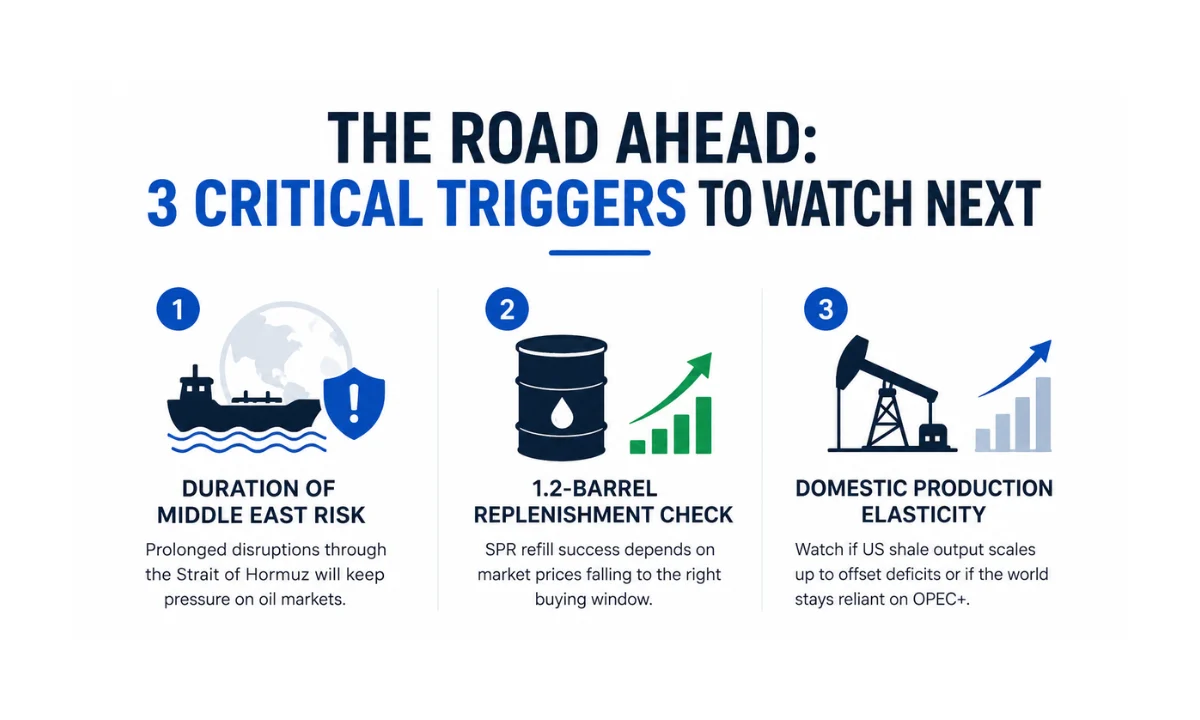
The unfolding situation proves that energy security & global geopolitics are permanently intertwined. Moving forward, the true impact of this emergency drawdown will be decided by three critical market factors:
- The Duration of the Middle East Risk Premium: If shipping disruptions through the Strait of Hormuz persist past the quarter, short-term SPR releases will act as a temporary band-aid rather than a permanent cure.
- The “1.2-Barrel” Replenishment Reality Check: While the administration’s exchange program promises premium returns from private energy firms, actual refilling success depends entirely on whether market prices drop to a viable buying window.
- Domestic Production Elasticity: Mainstream markets will closely monitor whether US shale producers scale up domestic operations to cushion the deficit, or if global supply remains tightly dependent on OPEC+ maneuvers.
The Strategic Petroleum Reserve is no longer just a silent insurance policy hidden in underground salt caverns it is actively being used as a macroeconomic lever. For institutional traders, retail investors, and everyday consumers at the pump, the SPR inventory report will remain one of the most volatile and closely watched indicators in the global energy market throughout 2026.
Share This Post